

Poinsettia Care: A Complete Guide (and How to Rebloom)
Poinsettia (Euphorbia pulcherrima) is the world's most popular holiday plant — and with the right poinsettia care it is far from a disposable one. This complete poinsettia care guide covers everything that matters for how to care for a poinsettia: light, watering, soil, humidity, temperature, feeding, the real story on toxicity, and the step-by-step method for how to rebloom a poinsettia so its red bracts return next winter[1][2]. Get the basics right and a poinsettia will hold its color for months, then come back for an encore.
Poinsettia care snapshot
Light
Bright light, 6+ hrs to hold bracts
Water
Keep lightly moist; never let it sit in water
Humidity
Moderate to high
Temperature
65–75°F; no cold drafts
Soil
Rich, well-draining mix
Feeding
None in bloom; balanced feed after
Toxicity
Only mildly irritating — not deadly
Difficulty
Easy to keep; reblooming takes effort
01 · MEET THE PLANT
What a poinsettia is and where it comes from
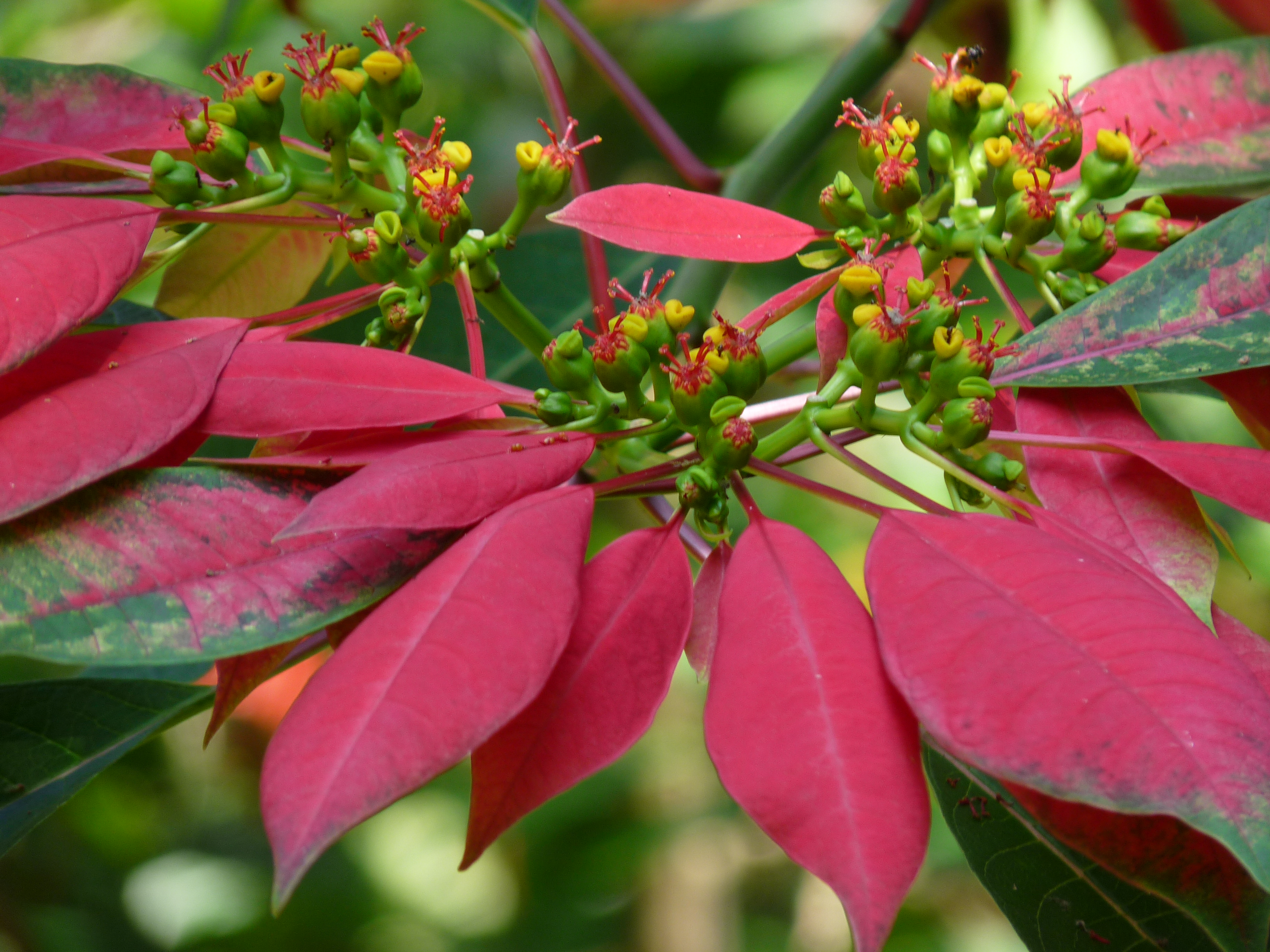
The poinsettia is a tender flowering shrub in the spurge family (Euphorbiaceae), native to the seasonally dry forests of Mexico and Central America, where it can grow into a woody plant more than ten feet tall[3][4]. The famous red “flowers” are not petals at all — they are modified leaves called bracts, and the true flowers are the small yellow structures (cyathia) clustered at the center. Good poinsettia care is really about keeping those bracts colorful for as long as possible.
Modern cultivars come in red, white, pink, marbled, and speckled forms, all bred for compact, long-lasting bracts. Whatever the color, the core of how to care for a poinsettia is the same: bright light, steady but modest moisture, warmth, and no cold drafts. Master those and the plant will thrive well past the holidays.
02 · LIGHT
Poinsettia light needs
Light is what holds the color, so poinsettia care starts at the window. Give the plant at least six hours of bright, indirect light a day — a south, east, or west window is ideal — and the bracts stay saturated and the plant compact[5]. In dim light the bracts fade and drop and the stems stretch. Keep foliage from touching cold glass. For the full breakdown, see our poinsettia light requirements guide.

03 · WATERING
How to water a poinsettia
Watering is where most poinsettias die — almost always from the foil-sleeve drowning trap. Keep the soil lightly moist, watering when the top inch feels dry, usually every 5–7 days[6]. Critically, remove the decorative foil or punch holes in it so water drains freely; a pot standing in trapped water rots the roots within days. Always empty the saucer. See how often to water a poinsettia for the full schedule.

04 · SOIL & POTTING
The best soil and pots for poinsettias
Poinsettias need a rich, free-draining potting mix that holds a little moisture without staying soggy — a quality peat- or coir-based mix with added perlite works well[7]. The pot must have drainage holes; this single detail prevents most root rot. There is no need to repot a holiday plant while in bloom. If you keep it for reblooming, pot up one size in late spring into fresh, well-draining mix.

05 · TEMPERATURE & HUMIDITY
Temperature and humidity for poinsettias
Warmth and stability are essential to poinsettia care. Keep the plant between 65 and 75°F during the day and no cooler than about 60°F at night, and shield it from cold drafts, open doors, and unheated porches — a sudden chill or exposure below 50°F makes the leaves yellow and drop[8]. Keep it away from heating vents and fireplaces too, which dry it out fast. As a subtropical, the poinsettia likes moderate to high humidity; a pebble tray or nearby humidifier helps in dry winter homes.
06 · FEEDING & PRUNING
Feeding and pruning a poinsettia
Do not fertilize a poinsettia while it is in full bloom — it needs nothing while displaying its bracts. Once the color fades and you cut it back for the year, resume feeding with a balanced liquid fertilizer roughly every 2–4 weeks through spring and summer to fuel new growth[7]. Prune in spring: cut stems back to about 4–6 inches to force bushy branching, and pinch new tips through summer for a full, well-shaped plant. Wear gloves — the milky sap can irritate skin.
07 · PROBLEMS & TOXICITY
Common poinsettia problems and the toxicity myth
- Leaf and bract drop. Usually cold shock or a watering swing — either the foil-sleeve drowning trap or letting the plant wilt bone-dry. Steady moisture and steady warmth fix it.
- Yellowing and wilting. Overwatering and root rot are the top cause. Check drainage and let the top inch dry between waterings.
- Pests. Whiteflies, fungus gnats, and spider mites are the usual suspects indoors — treat with insecticidal soap and improve airflow.
- Toxicity — debunking the deadly poinsettia myth. Despite the legend, poinsettias are only mildly toxic. The ASPCA classifies them as generally over-rated in toxicity; the sap may cause mild mouth and stomach irritation or drooling in pets and mild skin irritation in people, but it is not deadly[9]. Still, keep it away from nibbling pets and wash your hands after pruning.
If overwatering has already set in, improve drainage immediately and reduce watering — see how to stop overwatering houseplants.
08 · REBLOOM & SIZE
How to rebloom a poinsettia
Reblooming is the crown of poinsettia care. The poinsettia is a short-day plant: it only re-colors its bracts when nights grow long. Starting about eight to ten weeks before you want color (typically early October), give it around 14 hours of complete, uninterrupted darkness every night — a closet or a box over the plant works — then bright light during the day[10]. Even a brief burst of light at night interrupts the process, so darkness must be total. Keep this up for six to eight weeks and the bracts will color up again for the holidays. A well-kept plant may reach 2–3 feet indoors over time.
ACQUATERRA
Skip the foil-sleeve drowning trap — keep poinsettia moisture steady with a terracotta watering spike.
Shop AcquaTerra →That's the whole of poinsettia care: bright light to hold the bracts, light steady moisture with the foil removed, warm and draft-free conditions, feeding only after bloom, and long dark nights in fall to rebloom. Do those and a poinsettia is a year-round plant, not a throwaway. Keep exploring with poinsettia light requirements and how often to water a poinsettia.
Poinsettia care FAQ
How do I care for a poinsettia after Christmas?
Keep it in bright light, water when the top inch of soil is dry, and hold it at 65–75°F away from drafts. When the bracts fade in early spring, cut the stems back to 4–6 inches and resume regular feeding to grow it on for next year.
How often should I water a poinsettia?
Usually every 5–7 days — water when the top inch of soil feels dry. Remove any foil sleeve or punch holes in it so water drains, and never let the pot sit in a full saucer.
Are poinsettias poisonous?
No, the “deadly poinsettia” reputation is a myth. They are only mildly toxic; the sap can cause mild mouth or stomach upset in pets and mild skin irritation in people. Keep it away from pets to be safe, but it is not dangerous.
How do I make a poinsettia turn red again?
Give it about 14 hours of complete, uninterrupted darkness every night starting in early October, with bright light during the day. After six to eight weeks the bracts re-color. Any light at night interrupts the process.
Why is my poinsettia dropping leaves?
Usually cold shock or a watering extreme. Protect it from cold drafts and chilly windows, keep it warm, and water steadily — neither soggy nor bone-dry.
Can a poinsettia live all year?
Yes. With bright light, steady moisture, warmth, spring pruning, and summer feeding, a poinsettia lives for years and can be rebloomed each winter.
References
- [1] Royal Horticultural Society. (n.d.). Poinsettia (Euphorbia pulcherrima) / RHS Gardening. rhs.org.uk.
- [2] Missouri Botanical Garden. (n.d.). Euphorbia pulcherrima — Plant Finder. missouribotanicalgarden.org.
- [3] Royal Botanic Gardens, Kew. (n.d.). Euphorbia pulcherrima Willd. ex Klotzsch. Plants of the World Online. powo.science.kew.org.
- [4] USDA, Agricultural Research Service. (2023). GRIN: Euphorbia pulcherrima. npgsweb.ars-grin.gov.
- [5] University of Florida IFAS Extension. (n.d.). Poinsettias. Gardening Solutions. gardeningsolutions.ifas.ufl.edu.
- [6] University of Minnesota Extension. (2021). Caring for poinsettias. extension.umn.edu.
- [7] Penn State Extension. (2020). Poinsettia care and reflowering. extension.psu.edu.
- [8] North Carolina State Extension. (n.d.). Euphorbia pulcherrima. plants.ces.ncsu.edu.
- [9] ASPCA. (n.d.). Poinsettia — toxic and non-toxic plants. aspca.org.
- [10] University of Illinois Extension. (n.d.). Poinsettia reblooming and the poinsettia pages. extension.illinois.edu.
- [11] Clemson Cooperative Extension. (n.d.). Poinsettia. Home & Garden Information Center. hgic.clemson.edu.
- [12] University of Wisconsin–Madison Division of Extension. (n.d.). Poinsettia, Euphorbia pulcherrima. hort.extension.wisc.edu.
- [13] Michigan State University Extension. (n.d.). Poinsettia care. canr.msu.edu.
- [14] Taiz, L., & Zeiger, E. (2010). Plant Physiology, 5th ed. Sinauer Associates.
- [15] Lambers, H., Chapin, F.S., & Pons, T.L. (2008). Plant Physiological Ecology, 2nd ed. Springer.