

How Often to Water a Poinsettia: Schedule, Signs, and Factors That Matter
The poinsettia (Euphorbia pulcherrima) is the plant of the winter holidays — its brilliant red, white, or pink “flowers” are actually modified leaves called bracts, and they hold color for months if the plant is cared for well[1][2]. It is also the plant most people manage to kill by New Year’s, almost always through watering — either drowning it in a foil-wrapped pot or letting it dry to a crisp on a warm mantel. Poinsettias are surprisingly particular: sensitive to overwatering, sensitive to cold, and quick to drop leaves when either goes wrong. This guide covers how often to water a poinsettia through its winter bloom and beyond, which factors actually matter, and how to keep it bright long after the holidays.
Water a poinsettia when the top inch of soil is dry — typically every 5–7 days indoors. Water thoroughly until it drains, then empty the saucer or decorative sleeve so the roots never sit in water. Poinsettias drop leaves from both extremes: bone-dry soil and cold drafts, or waterlogged soil that rots the roots. Keep them warm (above 60°F), away from cold windows and heat vents, and evenly moist but never soggy.
01 · THE SIMPLE ANSWER
How often to water a poinsettia
In a typical warm indoor room, a poinsettia needs water roughly every 5–7 days — whenever the top inch of soil feels dry[1][3]. That interval shifts with the room: a plant near a heat vent in a dry, warm house may need water every 4–5 days, while one in a cooler room can go 7–10 days. The single most important habit is to check the soil rather than water on a fixed calendar — poinsettias are equally unhappy wet or dry.
Euphorbia pulcherrima is a tender, frost-sensitive shrub native to the seasonally dry tropical forests of Mexico and Central America, where it grows into a leggy plant several feet tall[4][5]. Its brilliant winter bract color is a photoperiodic response — it “blooms” in the short days of late autumn and early winter, which is exactly why it lands in shops for the holidays. The dozens of cultivars, from the classic red to marbled and pink forms, all share the same watering needs.
Use the finger test: push a finger an inch into the soil. If it is dry, water thoroughly until it drains from the bottom; if it is still moist, wait a day or two and check again. The most common killer is the decorative foil or plastic sleeve poinsettias come wrapped in — it traps drainage water around the roots and quietly drowns them. Poke drainage holes in it or slip it off when you water.
02 · THE BOTANY
Why poinsettias drop leaves so easily
Poinsettias evolved in a climate with a distinct wet and dry rhythm, so their roots are adapted to moist-then-drying soil, not constant saturation[5]. In a pot that never dries, the fine roots suffocate and rot — and confusingly, a plant with rotting roots wilts and drops leaves exactly as if it were thirsty, prompting owners to water more and accelerate the decline. This wet-dry sensitivity is the single most important thing to understand about the plant.
They are also acutely cold-sensitive. Poinsettias suffer below about 50–55°F, and even a brief chill — a cold windowpane, a draft from an opening door, or the trip home from the shop on a freezing day — triggers leaf and bract drop within days[7]. Much of the leaf drop blamed on watering is actually cold shock. Keeping the plant reliably warm matters as much as watering it correctly.
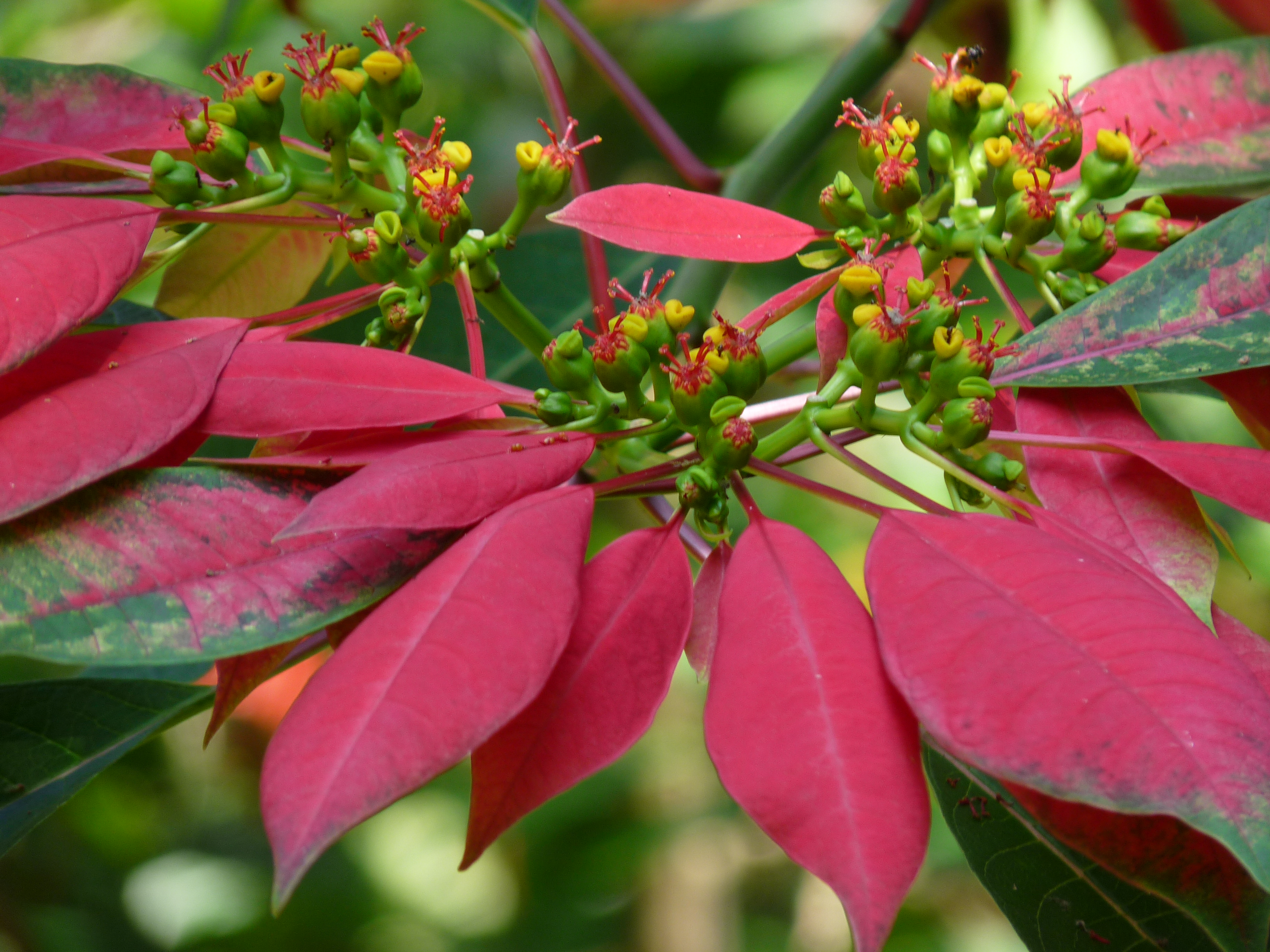
The vivid red is not a flower at all. The true flowers are the small yellow structures (cyathia) at the center; the color comes from bracts, modified leaves that turn red only when the plant receives long, uninterrupted nights in autumn. This photoperiodism is why getting a poinsettia to re-color the following year is such a project — it needs 14 hours of complete darkness each night for weeks[8].
Like other euphorbias, poinsettias exude a milky white latex sap when cut, and it can irritate skin and eyes — so wear gloves when pruning and keep the sap off your face. But the widespread belief that poinsettias are deadly poisonous is a persistent myth. The ASPCA classes the plant as only mildly toxic: ingestion may cause mild mouth and stomach irritation or drooling in pets, and a landmark analysis of thousands of human exposures found no fatalities and few cases needing any treatment at all[11][12]. Sensible precautions, not fear, are all that’s warranted.
03 · SEASONAL SCHEDULE
Poinsettia watering schedule through the year
Unlike most houseplants, the poinsettia’s show happens in winter, and its calendar runs backward from the usual pattern: peak display over the holidays, a rest and cut-back in spring, active growth through summer, and a carefully managed dark period in autumn to re-color it[3][7].
01 · Winter (Dec–Feb)
Every 5–7 days
Peak holiday display. Keep evenly moist and warm; empty the foil sleeve after every watering and keep off cold sills.
02 · Spring (Mar–May)
Every 7–10 days
Post-holiday. As bracts fade, cut stems back to about 4–6 inches and water less while the plant rests before regrowth.
03 · Summer (Jun–Aug)
Every 5–7 days
Active leafy growth. Can go outdoors in warmth once nights stay above 55°F; water more as it grows and pinch to shape.
04 · Fall (Sep–Nov)
Every 6–8 days
Re-coloring period. Give 14 hours of complete darkness nightly for 8–10 weeks; keep evenly moist and never let it chill.
04 · FACTORS THAT MATTER
Six factors that change how often you water a poinsettia
Room temperature and heat vents: Warm, dry holiday rooms — especially near a radiator or forced-air vent — dry the soil faster and demand more frequent watering. Cooler rooms slow it. But never solve dry heat by moving the plant somewhere cold; chill damage is worse than a little extra watering.
That decorative foil sleeve: The classic poinsettia killer. Left intact, it turns the pot into a saucer that holds drainage water against the roots. Remove it to water, let the pot drain fully, then replace it — or punch holes in the bottom and stand the pot on a dish.
Humidity: Winter heating drives indoor humidity very low, which can crisp leaf edges and stress the plant independent of soil moisture. A pebble tray or nearby humidifier helps keep bracts fresh through the holidays.
Pot size and material: The small, often root-bound nursery pots poinsettias ship in dry out quickly. Terracotta dries faster than the plastic pots most are sold in. A larger or glazed pot holds moisture longer and steadies the schedule.
Soil mix and drainage: Poinsettias must have free-draining soil. A peat- or coir-based mix with 20–25% perlite drains fast enough to prevent the waterlogging that rots their roots[9]. A drainage hole is non-negotiable.
Light and season: A bright winter windowsill (out of cold contact with the glass) keeps the plant active and drinking steadily. In its summer growth phase it uses far more water than during its holiday display or its spring rest.
05 · UNDERWATERING SIGNS
Signs your poinsettia needs water
A thirsty poinsettia wilts fast and, if ignored, sheds leaves quickly — but because cold and overwatering cause similar drops, check the soil before assuming thirst.[10]
- Wilting leaves and drooping bracts with dry soil. The earliest thirst signal. If the top inch is dry, water thoroughly and the plant usually firms up within a few hours — but repeated wilting shortens the display.
- Lower leaves yellow and drop. Chronic under-watering causes the oldest leaves to yellow and fall first, thinning the plant from the bottom. Distinct from cold drop, which tends to shed leaves more suddenly and evenly.
- Crispy brown leaf and bract edges. Dry soil plus low winter humidity browns the margins. The damage is permanent on affected leaves even after you correct watering.
- Soil pulling away from the pot edge. Severely dry mix shrinks and repels water, which then channels down the gap. Bottom-soak the pot in a basin for 20–30 minutes to rewet the rootball evenly.

06 · OVERWATERING SIGNS
Signs you’ve overwatered your poinsettia
Overwatering — usually caused by that trapped foil sleeve — is the leading way poinsettias die indoors, and its signs are easy to mistake for thirst.[11][13]
- Wilting despite wet soil. The most misleading sign — a poinsettia that looks thirsty but sits in soggy soil has rotting roots that can no longer take up water. Do not water more; remove any sleeve, let it drain, and let the soil dry out.
- Widespread yellowing and sudden leaf drop. Whole-plant yellowing with persistently damp soil signals root rot rather than the bottom-up yellowing of drought.
- Soft, mushy stems near the soil line. Stems should be firm. Softness at the base means rot has reached the crown — cut back to firm tissue and treat as advanced damage.
- Persistently soggy soil and fungus gnats. Soil that stays wet for over a week, often with small flies hovering, confirms poor drainage or chronic overwatering. Check the drainage hole and the sleeve first.
Recovery means removing the sleeve, letting the rootball dry, and repotting into fresh free-draining mix if rot has begun. For the complete protocol, see how to stop overwatering houseplants.
07 · THE METHOD
How to actually water a poinsettia
Water thoroughly until it drains freely from the pot’s holes — usually about 1–2 cups (250–500 ml) for a standard 6-inch grower pot[9]. Even, complete saturation followed by full drainage is the pattern the plant’s wet-then-dry roots evolved for.
Deal with the sleeve first. Slip the foil or plastic wrap off before watering, water at the sink, let the pot drain completely for a few minutes, then replace the sleeve. Or cut drainage holes in the bottom of the sleeve and stand the pot on a saucer you can empty.
Use room-temperature water. Cold water shocks the warmth-loving roots and can trigger the same leaf drop as a cold draft.
Never let the pot stand in collected water. Empty the saucer or decorative pot within a few minutes of watering — standing water is the fastest route to root rot.
Wear gloves if you prune. The milky sap can irritate skin and eyes; keep it off your face and wash your hands afterward.
08 · TEMPERAMENT & QUICK FACTS
Poinsettia temperament and quick facts
The poinsettia (Euphorbia pulcherrima) has a reputation for being fussy, but its temperament is really just particular: it knows what it likes and drops leaves when it doesn’t get it. Native to Mexico, where it grows into a leggy shrub several feet tall, it is grown indoors as the signature plant of the winter holidays. The brilliant red — or white or pink — “flowers” are not petals at all but bracts, modified leaves that surround the small true flowers at the center. Its two great sensitivities are cold and overwatering: it sulks below about 50–55°F and rots in soggy soil, so warmth and drainage matter as much as the watering itself.
A few quick facts explain its winter timing and its myths. The poinsettia is a short-day plant: those bracts only turn color in response to long, uninterrupted nights in autumn, which is exactly why it appears in shops for the holidays and why coaxing it to re-color the following year takes weeks of nightly darkness. It is also the subject of one of gardening’s most stubborn myths — the “deadly poinsettia.” In reality the ASPCA classes it as only mildly toxic: ingestion may cause mild mouth or stomach irritation and drooling in pets, and a landmark analysis of thousands of human exposures found no fatalities[11][12]. The milky sap can irritate skin, so gloves are sensible when pruning, but fear is not warranted.
Understood on its own terms, the poinsettia is far more resilient than its throwaway-plant reputation suggests. Give it a warm, stable spot away from cold glass and heat vents, keep it evenly moist but never waterlogged, and the bracts hold their color for months — and the plant can live on well past the holidays. Respect the two rules of warmth and drainage, and the rest of its care is genuinely undemanding.
Heading away over the holidays while your poinsettia is at its peak? See how to water a poinsettia while away.
ACQUATERRA
Even, drained everyday moisture for poinsettias — steady watering without the waterlogging, for bract color that lasts well past the holidays.
Shop AcquaTerra →
Poinsettias are easier than their reputation suggests once you respect two rules: keep them warm, and keep them evenly moist but never waterlogged. Water every 5–7 days when the top inch is dry, always deal with the foil sleeve so the roots can drain, and keep the plant off cold windowsills and away from vents. Do that and the bracts stay vivid for months — and the plant can live on well past the holidays.
Frequently asked questions
How often should I water a poinsettia?
Water when the top inch of soil is dry, typically every 5–7 days indoors. Water thoroughly until it drains, then empty the saucer or sleeve so the roots never sit in water. Check the soil rather than watering on a fixed schedule.
Why is my poinsettia dropping leaves?
Most often cold shock or a watering extreme. Chilly drafts and cold windows trigger sudden leaf drop, as do both bone-dry and waterlogged soil. Keep it above 60°F, away from vents and cold glass, and evenly moist but never soggy.
Are poinsettias poisonous?
The deadly-poinsettia reputation is a myth. The ASPCA rates it only mildly toxic — ingestion may cause mild mouth or stomach irritation and drooling in pets, and a large study of human exposures found no fatalities. The milky sap can irritate skin, so wear gloves when pruning, but the plant is not dangerously toxic.
How do I care for a poinsettia after Christmas?
As the bracts fade in spring, cut the stems back to about 4–6 inches, water less while it rests, then resume regular watering as new growth appears. Move it outdoors in summer once nights stay above 55°F, and give it 14 hours of nightly darkness through autumn to re-color it.
Should I remove the foil wrapper to water?
Yes — the decorative foil or plastic sleeve is the number-one poinsettia killer. It traps drainage water around the roots. Slip it off to water, let the pot drain fully, then replace it, or punch holes in the bottom and stand the pot on a saucer.
How much water does a poinsettia need?
About 1–2 cups (250–500 ml) per watering for a standard 6-inch grower pot, or enough to drain freely from the holes. Always empty the collected water afterward.
What temperature do poinsettias need?
Keep them in a warm room, ideally 65–70°F by day and no colder than about 60°F at night. They suffer below 50–55°F, so keep them off cold windowsills and shield them from drafts — even the trip home on a freezing day can cause leaf drop.
What happens if I overwater my poinsettia?
Root rot — marked by wilting in wet soil, widespread yellowing, soft stems at the base, and persistently soggy soil. It usually starts with a trapped foil sleeve. Remove the sleeve, let the rootball dry, and repot in fresh free-draining mix. See how to stop overwatering houseplants.
References
- [1] Royal Horticultural Society. (n.d.). Euphorbia pulcherrima / RHS Gardening. rhs.org.uk.
- [2] Missouri Botanical Garden. (n.d.). Euphorbia pulcherrima — Plant Finder. missouribotanicalgarden.org.
- [3] University of Florida IFAS Extension. (2018). Poinsettias at a glance. edis.ifas.ufl.edu.
- [4] Royal Botanic Gardens, Kew. (n.d.). Euphorbia pulcherrima Willd. ex Klotzsch. Plants of the World Online. powo.science.kew.org.
- [5] Ecke, P., Faust, J.E., Higgins, A., & Williams, J. (2004). The Ecke Poinsettia Manual. Ball Publishing.
- [6] Taiz, L., & Zeiger, E. (2010). Plant Physiology, 5th ed. Sinauer Associates.
- [7] University of Minnesota Extension. (2021). Caring for poinsettias. extension.umn.edu.
- [8] Penn State Extension. (2019). Poinsettia reflowering and photoperiod. extension.psu.edu.
- [9] Clemson Cooperative Extension. (n.d.). Poinsettia. Home & Garden Information Center. hgic.clemson.edu.
- [10] North Carolina State Extension. (n.d.). Euphorbia pulcherrima. plants.ces.ncsu.edu.
- [11] ASPCA. (n.d.). Poinsettia — Toxicity to pets (mild). aspca.org/pet-care/animal-poison-control.
- [12] Krenzelok, E.P., Jacobsen, T.D., & Aronis, J. (1996). Poinsettia exposures have good outcomes... just as we thought. American Journal of Emergency Medicine, 14(7), 671–674.
- [13] Daughtrey, M.L., & Benson, D.M. (2005). Principles of plant health management for ornamental plants. Annual Review of Phytopathology, 43, 141–169.
- [14] USDA, Agricultural Research Service. (2023). GRIN: Euphorbia pulcherrima. npgsweb.ars-grin.gov.
- [15] Lambers, H., Chapin, F.S., & Pons, T.L. (2008). Plant Physiological Ecology, 2nd ed. Springer.