

How Often to Water a Fittonia: Schedule, Signs, and Factors That Matter
No houseplant makes a bigger scene about being thirsty than a fittonia. Leave Fittonia albivenis a day too long and you come home to what looks like a total loss — every stem flat on the rim of the pot, leaves hanging like wet tissue. Water it and, within two or three hours, it stands back up as if nothing happened. That party trick has earned the plant a reputation for being difficult, when in truth it is simply the most articulate plant in the room about a single requirement: never let the mix dry out[1][2]. This guide covers how often to water a fittonia, what actually moves the schedule, and how to read the signals before the collapse.
Water a fittonia roughly every 3–5 days — whenever the very top of the mix feels barely dry to the touch. The goal is consistently moist soil that is never soggy and never bone-dry. A fittonia that dries out faints dramatically and usually recovers within hours of watering, but each collapse costs it leaves. High humidity reduces the strain considerably. The plant is listed as non-toxic to cats and dogs.
01 · THE SIMPLE ANSWER
How often to water a fittonia
Under ordinary indoor conditions, a fittonia needs watering every 3–5 days. That is a shorter interval than almost any other common foliage houseplant, and it is not negotiable: unlike a pothos or a snake plant, a fittonia has no water reserves to fall back on and no tolerance for a soak-and-dry cycle[1][3]. What it wants is the moisture level of rainforest leaf litter — damp, airy, and never allowed to go properly dry.
The practical test is a light one. Rest a fingertip on the surface of the mix. If it feels cool and slightly damp, wait. If the very top has just lost its dampness — not crumbly, not dusty, just no longer wet — water now. Waiting until an inch of soil is dry, which is standard advice for most houseplants, is already too late for this one.
One naming note before we go further: fittonia is sold in the same shops as nerve plant and mosaic plant, and all three names refer to Fittonia albivenis. Everything in this guide applies whichever tag came with your pot; our companion piece on how often to water a nerve plant covers the same species.

02 · THE BOTANY
Why a fittonia faints — and why it gets back up
Everything about a fittonia's construction points to a plant that never expected to be dry. The stems are soft and unlignified, the leaves are thin and broad with no waxy cuticle worth mentioning, and the root system is shallow and fibrous, sitting in the top couple of inches of the pot. Structural rigidity comes almost entirely from turgor pressure — the hydraulic tension of water inside each cell pressing against the cell wall[6]. Remove the water and the scaffolding goes with it, which is why the collapse is so total and so fast.
The recovery is the same mechanism running backwards. Rehydrate the shallow root mat and the cells refill within an hour or two, turgor returns, and the plant lifts itself off the pot rim. Nothing has been repaired — the plant was never structurally damaged, only deflated. This is genuinely different from a woody plant wilting, where visible drooping means the situation has already been serious for some time.
But there is a bill for each performance. Every full collapse pushes some leaves past the point of recovery, and those leaves brown at the margins and abscise over the following week. A fittonia that faints monthly stays handsome; one that faints weekly gradually goes bald at the base and loses its dense carpeting habit. The aim is to water before the show, not in response to it.
Humidity is the other half of the botany. As an understory plant from the humid tropics of Peru and the surrounding lowlands, fittonia evolved under near-saturated air where leaves lose water slowly[4]. Drop it into a heated room at 25% relative humidity and the same leaf area loses water several times faster, which is why identical watering routines succeed in a terrarium and fail on an open shelf.
03 · SEASONAL SCHEDULE
Fittonia watering schedule by season
Fittonia is an evergreen tropical with no dormancy, so it never stops needing moisture entirely. What changes across the year is how fast the pot loses it — and central heating makes winter trickier than the slower growth rate would suggest[3][10].
01 · Spring (Mar–May)
Every 3–5 days
New runners appear and demand climbs steadily. A good moment to repot — fresh mix holds moisture far better than an exhausted rootball.
02 · Summer (Jun–Aug)
Every 2–4 days
Peak demand. Small pots in warm rooms may need checking daily; a fittonia on a summer windowsill can dry between breakfast and dinner.
03 · Autumn (Sep–Nov)
Every 4–6 days
Light levels fall and growth eases off. Stretch the interval gradually rather than in one jump, and move plants clear of radiators as heating starts.
04 · Winter (Dec–Feb)
Every 5–7 days
Slower growth but bone-dry heated air. Keep the mix just moist and raise humidity — this is the season fittonias most often crisp at the edges.
04 · FACTORS THAT MATTER
Six factors that change how often you water a fittonia
Humidity above everything: For this species, ambient humidity outranks even light as a driver of water use. At 60%+ relative humidity — a terrarium, a cloche, a steamy bathroom — a fittonia may hold moisture for a week without complaint. At 25% in a heated winter room, the same plant in the same pot can wilt in 48 hours. Raise the humidity and the watering problem largely solves itself.
Pot size and material: Fittonias are usually sold in tiny 3–4 inch nursery pots, and that small soil volume is the single most common reason owners struggle. There is simply not enough reservoir to buffer a missed day. Moving to a slightly larger pot, or an unglazed pot inside a cache pot rather than exposed, stretches the interval meaningfully.
Light level: Brighter indirect light raises transpiration and shortens the interval; a fittonia in a dim corner may go twice as long between waterings. Because the plant should never be in direct sun anyway, the spread here is smaller than for a sun-grown plant — but real. See fittonia light requirements for the placement side.
Soil mix: The mix has to do two contradictory jobs — hold moisture continuously and still drain freely. A peat- or coir-based potting compost with about 20% perlite and a handful of fine bark hits the balance. Straight dense compost stays wet at depth and rots the shallow roots; a gritty cactus mix dries far too fast[11].
Room temperature and airflow: Warmth accelerates water loss, and moving air accelerates it further. A fittonia sitting above a radiator, next to a heating vent, or in the path of an air-conditioning draught will need water noticeably more often — and will crisp at the leaf edges regardless of how diligent you are. Relocation beats compensation.
How rootbound it is: A fittonia that has filled its pot is nearly all root and very little soil, so the reservoir shrinks even as demand grows. If a previously reliable plant has started drying twice as fast, tip it out and look — a spring repot into fresh mix usually restores the old schedule.

05 · UNDERWATERING SIGNS
Signs your fittonia needs water
Thirst signals in a fittonia arrive in a predictable order. The earlier you learn to catch them, the fewer leaves you lose[7]:
- A slight loss of gloss and a softening of the leaf edge. The subtle first warning, hours ahead of the collapse. Leaves look faintly matte and the margins lose their crispness. Water at this stage and nothing is lost.
- Total collapse onto the pot rim. The famous faint — every stem prostrate, leaves limp. Water thoroughly and the plant is usually upright again within two to four hours, but treat it as a failure of the schedule rather than a routine event.
- Brown, brittle leaf margins a few days later. The delayed cost of a collapse. Damaged leaves do not green up again; they brown from the edge inward and eventually drop, thinning the base of the plant.
- The mix shrinks from the pot wall. Peat-based compost that has gone properly dry turns water-repellent, so a normal watering runs down the gap and out of the drainage holes without wetting the rootball. Stand the pot in a few centimetres of water for 20 minutes instead.
06 · OVERWATERING SIGNS
Signs you have overwatered your fittonia
"Keep it moist" is heard by a lot of owners as "keep it saturated", and a fittonia's shallow roots suffocate in standing water as readily as they shrivel in dry mix[12][13]:
- Wilting that does not respond to watering. The diagnostic sign, and the one people misread most often. A fittonia limp in wet soil has rotted roots that cannot draw water. More water makes it worse; the mix needs to dry back and the drainage needs fixing.
- Translucent, mushy stem bases. Soft, water-soaked stems at the soil line indicate rot has moved up from the roots. Take clean cuttings from the healthy tips immediately — fittonia roots readily in water or damp moss — because the base rarely recovers.
- Yellowing lower leaves in permanently wet mix. Uniform yellowing from the bottom of the plant upward, combined with soil that never dries at the surface, points to drowning rather than drought.
- Fungus gnats and surface mould. Small flies rising from the pot and a green or white film on the soil are both symptoms of a surface that never dries at all. Let the very top of the mix dry between waterings and both clear up.
The distinction that matters: consistently moist means the mix feels like a wrung-out sponge, not a bog. If your fittonia sits in a decorative pot with no drainage hole, that is the first thing to change — the full protocol is in how to stop overwatering houseplants.

07 · THE METHOD
How to actually water a fittonia
Water the whole pot until it runs freely from the drainage holes — for a typical 4-inch fittonia that is roughly half a cup (about 120 ml), and around a cup for a 6-inch pot[11]. Partial watering only wets the surface and leaves the lower root mat permanently dry, which is a slow way to arrive at the same collapse.
Bottom-watering suits this plant particularly well. Stand the pot in a shallow dish of water for 15–20 minutes, let it wick upward, then lift it out and let the excess drain. This wets the rootball evenly, avoids compacting the surface, and keeps water off the crowded low foliage.
Use room-temperature water. A shallow-rooted tropical shocked with cold tap water can drop leaves for reasons that have nothing to do with the schedule, and the effect is easy to mistake for underwatering.
Empty the saucer every time. Ten minutes of contact with drained water is fine; a permanent reservoir under the pot is how a fittonia goes from thriving to rotted in a fortnight.
Pair watering with humidity rather than treating them as alternatives. A pebble tray, a grouped cluster of plants, a closed terrarium, or a nearby humidifier all cut the rate of water loss, which lengthens the safe interval and reduces the leaf-edge browning that dry air causes independently of soil moisture.
08 · TEMPERAMENT & QUICK FACTS
What a fittonia is really like to live with
Origin. Fittonia albivenis is a creeping evergreen perennial in the Acanthaceae, native to the rainforest understory of Peru and adjacent parts of tropical South America, where it spreads across damp leaf litter beneath a closed canopy[4]. Warm, shaded, permanently humid, never dry — every quirk of its behaviour indoors traces straight back to that habitat.
Personality. Theatrical but not actually fragile. A fittonia will faint on you and then forgive you, which makes it a surprisingly good plant for beginners willing to check in often — it never leaves you guessing about what it wants. It roots almost embarrassingly easily from stem tips, tolerates hard pinching to keep it bushy, and rarely attracts pests. Its one genuine demand is consistency, which is also the hardest thing to supply on a busy week.
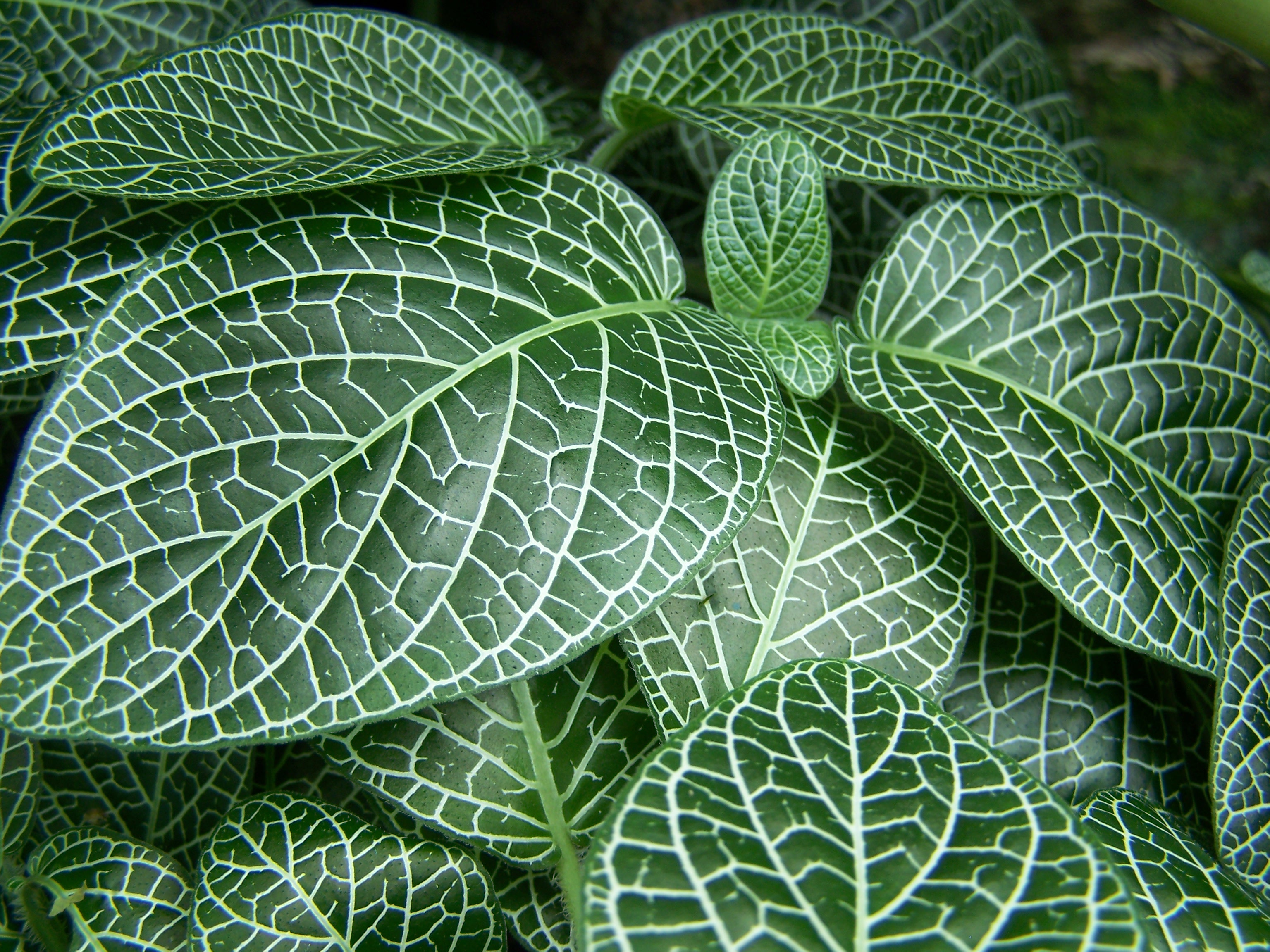
Size and habit. Low and spreading rather than upright — typically 3–6 inches tall with a spread of 12–18 inches, rooting along the stems as it creeps. That habit makes it a natural groundcover in terrariums and bottle gardens, and an excellent skirt around the base of taller plants in a shared pot. Cultivars run from fine white netting to bold scarlet veining, with small leaves and large-leaved forms sold under many trade names.
Toxicity. Good news for pet households: fittonia is listed by the ASPCA as non-toxic to dogs, cats, and horses[14]. It is one of the few genuinely showy patterned houseplants you can put on a low shelf without worrying about a curious cat.
ACQUATERRA
A fittonia asks for steady moisture every few days — a terracotta spike delivers it while you get on with your week.
Shop AcquaTerra →In short: water a fittonia every 3–5 days, keep the mix evenly damp and never waterlogged, raise the humidity if you can, and aim to water before the plant collapses rather than because it has. Do that and you get a dense, vividly veined carpet that asks for very little else. For where to put it so the veins stay bold, read fittonia light requirements.
Frequently asked questions
Is a fittonia the same as a nerve plant?
Yes — fittonia, nerve plant, and mosaic plant all refer to Fittonia albivenis. The watering schedule described here applies whichever name your plant was sold under.
How often should I water my fittonia?
Every 3–5 days as a baseline, watering as soon as the very top of the mix stops feeling damp. Expect every 2–4 days in warm summer rooms and every 5–7 days in cooler winter conditions.
My fittonia collapsed completely — is it dead?
Almost certainly not. A fittonia that faints from thirst normally stands back up within two to four hours of a thorough watering. Expect to lose a few leaves at the edges afterwards, and treat it as a sign to shorten the interval.
Should I let a fittonia dry out between waterings?
No. This is one of the few houseplants that should never go properly dry. Aim for consistently moist — the feel of a wrung-out sponge — rather than the soak-and-dry cycle recommended for most foliage plants.
Why are my fittonia's leaf edges going brown and crispy?
Usually low humidity, repeated wilting, or both. Move the plant away from radiators and vents, group it with other plants or add a pebble tray, and tighten the watering interval so it never reaches full collapse.
Is a fittonia safe around cats and dogs?
Yes. The ASPCA lists fittonia as non-toxic to dogs, cats, and horses, making it one of the safer choices for a low shelf or a pet-friendly terrarium.
Can I grow a fittonia in a closed terrarium instead?
Yes, and it is the easiest way to keep one. A sealed terrarium recycles its own moisture and holds high humidity, so watering drops to occasional top-ups rather than a strict every-few-days routine.
References
- [1] Royal Horticultural Society. (n.d.). Fittonia / RHS Gardening. rhs.org.uk.
- [2] Missouri Botanical Garden. (n.d.). Fittonia albivenis — Plant Finder. missouribotanicalgarden.org.
- [3] University of Wisconsin–Madison Division of Extension. (n.d.). Nerve plant, Fittonia albivenis. hort.extension.wisc.edu.
- [4] Royal Botanic Gardens, Kew. (n.d.). Fittonia albivenis (Lindl. ex Veitch) Brummitt. Plants of the World Online. powo.science.kew.org.
- [5] Brummitt, R.K. (1983). Fittonia albivenis, the correct name for the nerve plant. Kew Bulletin, 38(3), 460–461.
- [6] Taiz, L., & Zeiger, E. (2010). Plant Physiology, 5th ed. Sinauer Associates.
- [7] University of Minnesota Extension. (2021). Watering houseplants. extension.umn.edu.
- [8] University of Florida IFAS Extension. (2021). Foliage plants for the home. gardeningsolutions.ifas.ufl.edu.
- [9] ASPCA. (n.d.). Nerve plant (Fittonia albivenis) — non-toxic to dogs and cats. aspca.org.
- [10] North Carolina State Extension. (n.d.). Fittonia albivenis. plants.ces.ncsu.edu.
- [11] Penn State Extension. (2020). Houseplant care: watering, fertilizing, and repotting. extension.psu.edu.
- [12] Clemson Cooperative Extension. (n.d.). Indoor plants — watering. Home & Garden Information Center. hgic.clemson.edu.
- [13] Michigan State University Extension. (n.d.). Overwatering and root rot in houseplants. canr.msu.edu.
- [14] USDA, Agricultural Research Service. (2023). GRIN: Fittonia albivenis. npgsweb.ars-grin.gov.
- [15] Lambers, H., Chapin, F.S., & Pons, T.L. (2008). Plant Physiological Ecology, 2nd ed. Springer.