

Nerve Plant Light Requirements: A Complete Guide to Getting the Light Right
Getting nerve plant light requirements right is what separates a fittonia with electric, high-contrast veining from one that looks flat, faded, and stretched. Nerve plant (Fittonia albivenis) is a low-growing tropical from the rainforest understory, and everything about its light needs follows from that: it wants medium to bright indirect light, tolerates lower light with a cost, and burns quickly in direct sun. This guide covers exactly how much light a nerve plant needs, which windows suit it, how light drives vein contrast, and why fittonia is such a natural terrarium plant[1][2].
Nerve plant light meter
Nerve plant light requirements in one line: medium to bright indirect light is ideal. Fittonia tolerates lower light but loses vein contrast and grows leggy there, and it must be kept out of direct sun, which bleaches and scorches the veined leaves within days. Filtered light through an east or north window — or a lit terrarium — is the sweet spot.
01 · THE SIMPLE ANSWER
How much light does a nerve plant need?
A nerve plant needs medium to bright indirect light — roughly 10–12 hours a day of soft, filtered brightness with no direct sun striking the leaves[1][3]. That is the light level where fittonia keeps tight, compact growth, produces new leaves steadily, and holds the crisp white, pink, or red vein pattern it is grown for. Anything brighter than filtered light risks bleaching; anything dimmer slowly washes the contrast out.
The reason is its origin. Fittonia albivenis is a creeping perennial from the rainforest floor of Peru and the wider western Amazon basin, where it spreads across shaded, humid leaf litter under a closed canopy[4][5]. Understory plants like this evolved to harvest dappled, heavily filtered light — their thin leaves have no waxy armor and no capacity to shed excess radiation. A nerve plant on a sunny windowsill is a shade plant sitting in the wrong habitat, and it shows the damage fast.
A useful rule of thumb: if the spot is bright enough to read a book comfortably all day but you cannot see a sharp, hard-edged shadow cast by the sun, the light level is about right for fittonia. If a beam of sunlight lands on the leaves at any point in the day, move the plant or filter the glass.

02 · THE LIGHT METER
Nerve plant light levels, from deep shade to full sun
The easiest way to think about nerve plant light needs is a spectrum. Here is where a fittonia wants to sit on it — the outlined band marks the ideal light conditions:
Nerve plant light meter
Notice how far to the left that band sits compared with most houseplants. A nerve plant thrives in medium to bright indirect light, copes with genuinely low light better than almost any patterned foliage plant, and falls off a cliff the moment direct sun enters the picture[2][6]. The "some direct" and "full sun" zones are not a stretch goal for fittonia — they are the danger zone. If you remember one thing about nerve plant lighting, make it this: bright but never direct.
Deep shade is survivable but not desirable. In the far-left part of the meter a fittonia hangs on, stops producing new leaves, and its veins gradually blur into the leaf background. Low light is the plant idling; bright indirect light is the plant performing.
03 · LIGHT BY WINDOW
The best window and placement for nerve plant light
Which window gives the right light for a nerve plant? Window direction is the fastest way to estimate the light conditions a spot provides (for the Northern Hemisphere — reverse for the Southern)[7]:
East window
✓ Ideal
Soft morning light then bright indirect light all day. The single best nerve plant light placement — set back a foot or two from the glass.
North window
✓ Good
Steady low-to-medium indirect light with zero burn risk. Fittonia does well right on the sill here; vein contrast is slightly softer.
West window
△ Set well back
Hot afternoon direct sun scorches the thin leaves fast. Place several feet back or filter with a sheer curtain.
South window
✗ Filter or avoid
The most intense light in the home and the fastest way to bleach a fittonia. Only workable behind a sheer curtain or well off to the side.
Bathrooms and kitchens deserve a special mention. Because nerve plant light requirements pair with a strong preference for humidity, a bright bathroom with a frosted or north-facing window is often the single best spot in the house — filtered light plus ambient moisture is very close to the understory conditions fittonia evolved for.
Distance from the glass matters as much as direction. Light falls off steeply indoors, so a nerve plant on a bright sill and the same plant eight feet into the room are living in completely different light levels. If a corner feels dim to you, it is dimmer still to the plant.
04 · TOO LITTLE LIGHT
Signs your nerve plant needs more light
Fittonia is honest about insufficient light, though its signals are subtler than a wilting episode. When the light level drops below what it wants, it tells you[8]:
- Fading vein contrast. The signature white, pink, or red veining blurs toward plain green as the plant maximizes chlorophyll to capture what little light it gets. This is the earliest and clearest sign a nerve plant needs brighter conditions.
- Leggy, stretched stems. Long bare gaps between leaf pairs as the creeping stems reach for light. A compact fittonia turning open and sparse is stretching, not maturing.
- Small new leaves and stalled growth. Each new leaf emerges smaller than the last, and the plant barely spreads — a direct response to too little light.
- Soil that stays wet for days. Low light slows transpiration, so the pot never dries and root-rot risk climbs. With a moisture-loving plant like fittonia, low light quietly turns careful watering into overwatering.

05 · TOO MUCH LIGHT
Signs your nerve plant is getting too much light
With fittonia this is the more urgent failure mode. Direct sun damages the thin, unprotected leaves within days, and unlike a fading vein pattern the damage does not reverse[6][9]:
- Bleached, washed-out leaves. The green fades to pale yellow-green and the veins lose definition from the other direction — excess light degrades chlorophyll faster than the plant can replace it.
- Scorched tan or brown patches. Dry, papery burn marks where a sunbeam landed on the leaf surface. Permanent on affected leaves — prune them off once new growth appears.
- Curling leaves and constant wilting. Leaves curl inward to cut exposed surface area, and the plant faints repeatedly as intense light drives water loss past what the roots can supply.
- Crispy brown leaf edges. The combination of too much direct light and the dry, hot air of a sunny window — a fittonia in that spot is fighting on two fronts at once.
The fix is simple: pull the plant back from the glass or hang a sheer curtain to convert direct sun into the bright, indirect light a nerve plant actually wants. Damaged leaves will not recover, but new growth comes in clean within a few weeks.
06 · LIGHT, GROWTH & COLOR
How light controls nerve plant vein color and growth
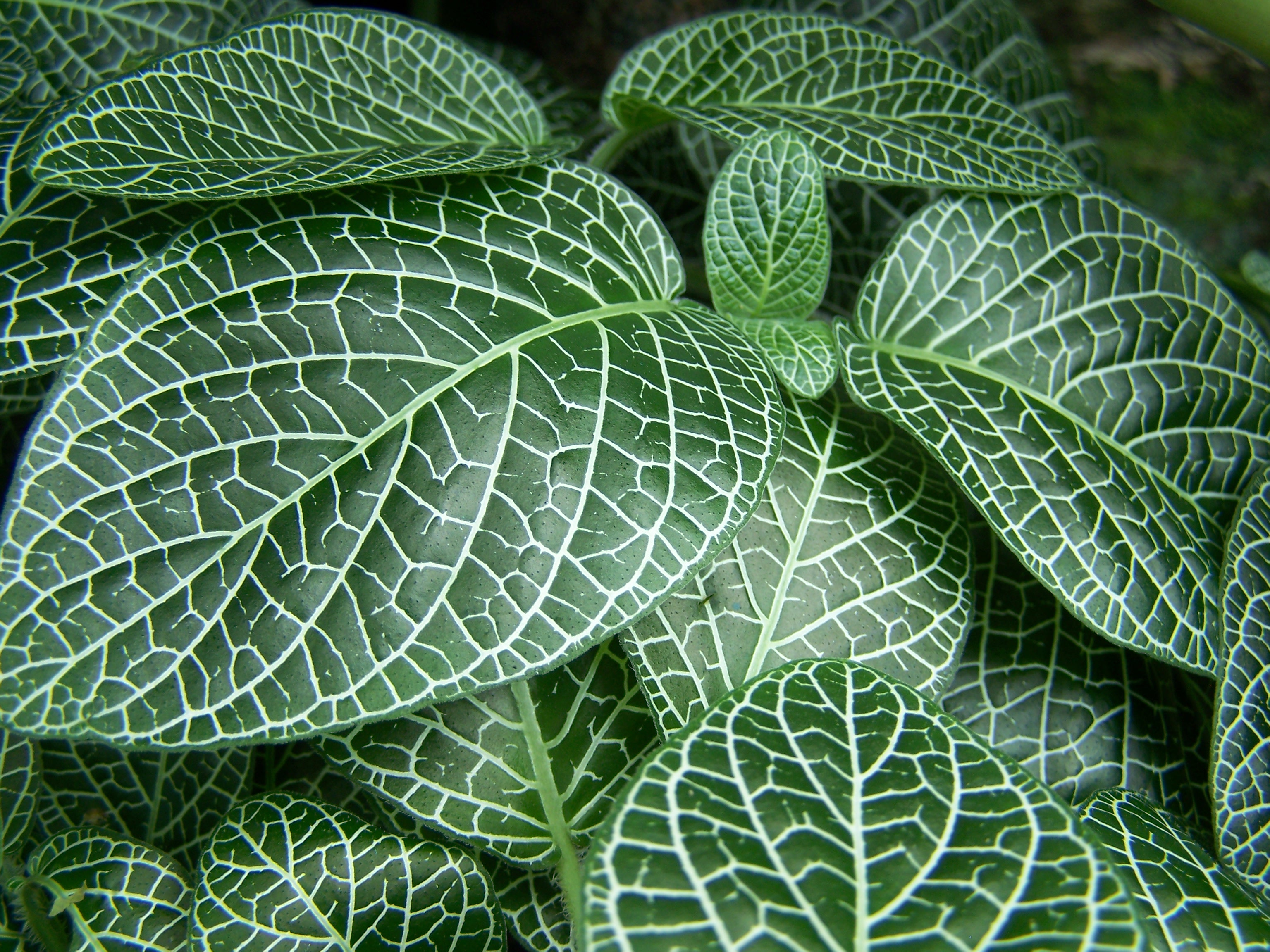
Vein contrast is the clearest example of how nerve plant light requirements shape the plant. The white, pink, and red vein tissue contains little chlorophyll, so it contributes almost nothing to photosynthesis. In good indirect light the plant can afford to keep that non-productive patterning, and the contrast stays sharp. In low light it compensates by pushing chlorophyll into the whole leaf, and the veins blur toward green[2][10].
This is why heavily patterned cultivars have slightly higher light needs than plainer ones. Broad white-veined forms such as ‘Argyroneura’ and the small-leaved ‘Mini White’ hold their pattern best in the brighter half of the indirect range, while red- and pink-veined types like ‘Red Anne’, ‘Pink Angel’, and the Verschaffeltii group depend partly on anthocyanin pigments and can look richer with a little more light — still filtered, never direct.
Light also drives habit. A fittonia in good indirect light stays low, dense, and creeping, with leaf pairs packed tight along the stem — the look that makes it such a good ground-cover layer in a planted arrangement. The same plant in a dim corner opens up, and the bare stem between each leaf pair grows longer and longer until the plant is more stem than foliage. Pinching helps, but light is the real lever.

One more light factor is unique to fittonia: the terrarium. Nerve plant is one of the most-planted terrarium species precisely because a closed glass container reproduces its native conditions — high humidity, gentle diffuse light, and no drying airflow[11]. Place a terrarium in bright indirect light only. Glass concentrates and traps heat, so a terrarium in direct sun can cook its contents in a single afternoon — the one situation where too much light kills a nerve plant faster than any watering mistake.
07 · GROW LIGHTS & SEASONS
Grow lights, seasonal shifts, and low-light rooms
If your space cannot supply enough natural light, a grow light closes the gap easily — and fittonia is an unusually good candidate because its light target is modest. A standard LED grow light run 10–12 hours a day, positioned 12–24 inches above the foliage, comfortably meets nerve plant light requirements without any burn risk[7][12]. This is why nerve plant thrives on office desks and in windowless terrarium displays under a small clip light.
Seasons matter too. Winter light in temperate latitudes can be a fraction of summer intensity, so a spot that was perfect in July may be too dim by December. The usual move is to shift the plant a foot or two closer to the window for the winter and back again in spring — and to clean the glass, which can cut transmitted light noticeably when dirty. When you do move a nerve plant to brighter conditions, acclimate it over a week or two rather than all at once.
08 · LIGHT & WATERING
Match watering to your nerve plant light level
Light and water are two halves of the same equation, and with fittonia they are tightly coupled. A nerve plant in bright indirect light transpires faster, drinks more, and can dry to the point of fainting in three days; the same plant in a dim corner may take a week to reach the same soil moisture. Get the light right and the watering rhythm becomes predictable — for the full schedule see how often to water a nerve plant.
The trap to avoid is watering on a fixed calendar after moving the plant. A fittonia relocated from a bright sill to a dim shelf, still watered every three days, is being overwatered even though nothing about the routine changed — see how to stop overwatering houseplants for the signs and the fix. Always let the plant's actual light level set the interval.
ACQUATERRA
Bright light speeds a nerve plant through its water — keep moisture steady with a terracotta spike and end the fainting episodes.
Shop AcquaTerra →To sum up the nerve plant light requirements: give it medium to bright indirect light for the best vein contrast and compact growth, accept that lower light means a softer pattern, and keep it out of direct sun entirely. Match the light to the window, favor humid rooms and terrariums, adjust for the seasons, and reach for a grow light if your space runs dark. Then match your watering to the light level — the full schedule is in how often to water a nerve plant.
Frequently asked questions about nerve plant light
How much light does a nerve plant need?
Nerve plant light requirements center on medium to bright indirect light for 10–12 hours a day. Fittonia tolerates lower light but loses vein contrast and grows leggy there, and it must be kept out of direct sun, which bleaches and scorches the leaves.
Can a nerve plant take direct sunlight?
No. Direct sun bleaches and scorches fittonia leaves within days, leaving permanent pale or tan patches. Even a short daily sunbeam is enough to cause damage. Filter bright windows with a sheer curtain or set the plant back from the glass.
Can a nerve plant grow in low light?
Yes, fittonia tolerates low light better than most patterned foliage plants, but there is a cost: growth stalls, stems stretch, and the white, pink, or red veining fades toward plain green. For its best look, give it brighter indirect light.
Why is my nerve plant losing its vein color?
Usually insufficient light. In dim conditions fittonia fills the leaf with chlorophyll to capture what light there is, blurring the vein pattern. Bleached, washed-out color with tan patches is the opposite problem — too much direct sun.
What window is best for a nerve plant?
An east-facing window is ideal — gentle morning light and bright indirect light for the rest of the day. North windows are good and carry no burn risk. South and west windows need a sheer curtain or several feet of distance.
What light does a nerve plant terrarium need?
Bright indirect light only, or a small LED grow light run 10–12 hours a day. Never place a fittonia terrarium in direct sun — the glass traps heat and can cook the plants inside within a single afternoon.
Does more light mean more water for a nerve plant?
Yes. A fittonia in bright indirect light transpires faster and can dry out in three days, while the same plant in a dim corner stays moist for a week. Always match your watering interval to the plant's actual light level rather than a fixed calendar.
References
- [1] Missouri Botanical Garden. (n.d.). Fittonia albivenis — Plant Finder. missouribotanicalgarden.org.
- [2] Royal Horticultural Society. (n.d.). Fittonia / RHS Gardening. rhs.org.uk.
- [3] University of Minnesota Extension. (2022). Lighting for indoor plants and starting seeds. extension.umn.edu.
- [4] Royal Botanic Gardens, Kew. (n.d.). Fittonia albivenis (Lindl. ex Veitch) Brummitt. Plants of the World Online. powo.science.kew.org.
- [5] USDA, Agricultural Research Service. (2023). GRIN Taxonomy: Fittonia albivenis. npgsweb.ars-grin.gov.
- [6] Clemson Cooperative Extension. (n.d.). Indoor plants: light requirements. Home & Garden Information Center. hgic.clemson.edu.
- [7] University of Florida IFAS Extension. (2021). Light for houseplants. gardeningsolutions.ifas.ufl.edu.
- [8] Penn State Extension. (2020). Houseplants: light requirements. extension.psu.edu.
- [9] North Carolina State Extension. (n.d.). Fittonia albivenis. NC State Extension Plant Toolbox. plants.ces.ncsu.edu.
- [10] Taiz, L., & Zeiger, E. (2010). Plant Physiology, 5th ed. Sinauer Associates.
- [11] University of Wisconsin–Madison Division of Extension. (n.d.). Terrariums and tropical foliage plants. hort.extension.wisc.edu.
- [12] Michigan State University Extension. (n.d.). Light and houseplants. canr.msu.edu.
- [13] Lambers, H., Chapin, F.S., & Pons, T.L. (2008). Plant Physiological Ecology, 2nd ed. Springer.
- [14] ASPCA. (n.d.). Nerve plant (Fittonia) — non-toxic to dogs and cats. aspca.org.
- [15] Brummitt, R.K. (1986). Nomenclatural notes on Fittonia (Acanthaceae). Kew Bulletin, 41(4), 1005–1006. kew.org.