

Kalanchoe Light Requirements: A Complete Guide to Light for Blooms
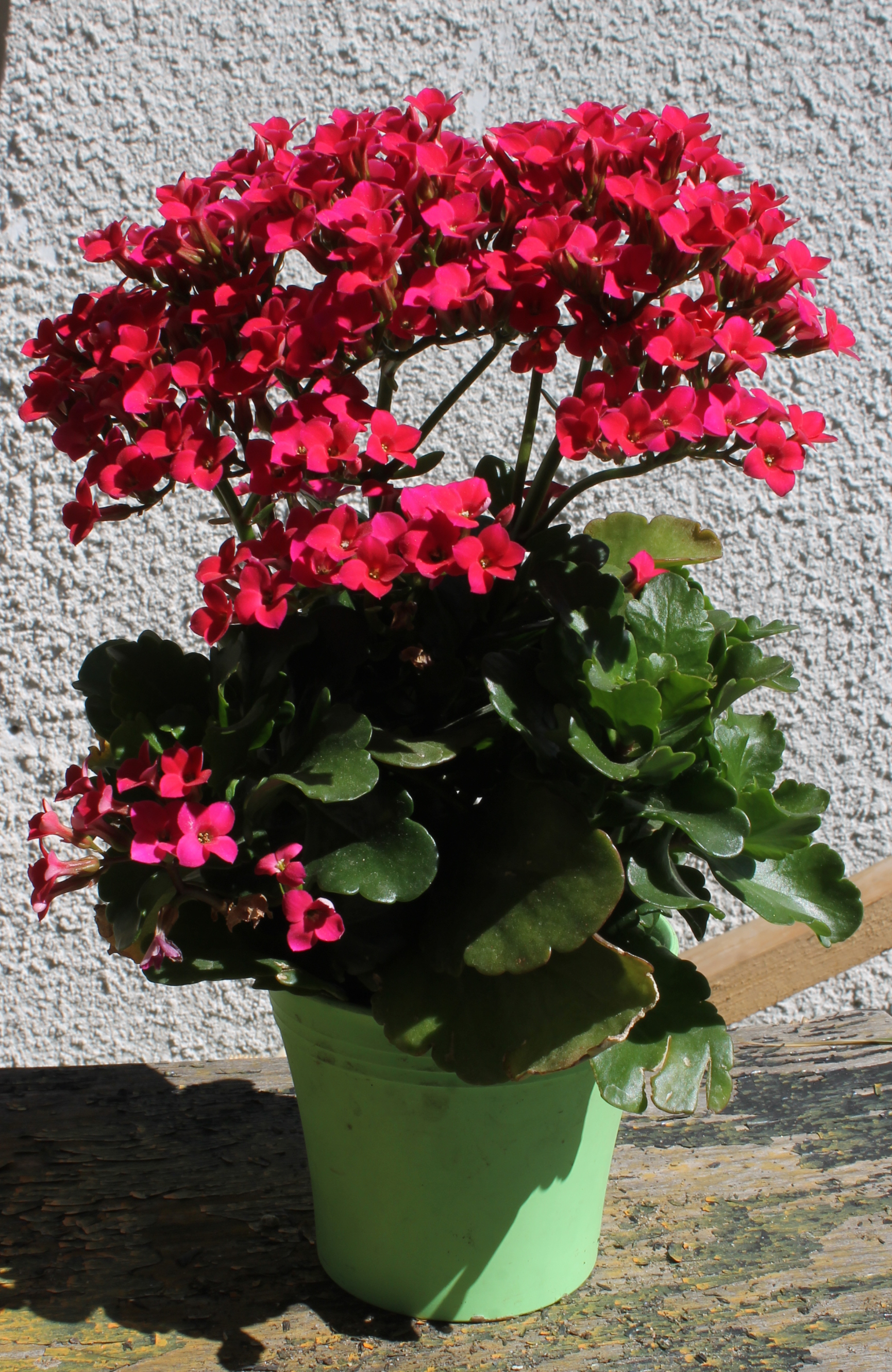
Getting kalanchoe light requirements right is the difference between a compact plant smothered in flowers and a stretched, leafy thing that never blooms again. Kalanchoe (Kalanchoe blossfeldiana, sold as flaming Katy) is a succulent from Madagascar that wants far more light than most houseplants — and, uniquely, it also needs a long stretch of true darkness every night before it will set buds[1][2]. This guide covers exactly how much light a kalanchoe needs, which window suits it, the short-day darkness trick that forces reblooming, and how to read the plant when the light level is wrong.
Kalanchoe light meter
Kalanchoe light requirements in one line: give it bright light with several hours of direct sun a day — a south or east window is ideal. Kalanchoe is a short-day plant: to set flower buds it also needs roughly 14 hours of uninterrupted darkness every night for about six weeks. Too little light means leggy stems, pale leaves, and no flowers at all.
01 · THE SIMPLE ANSWER
How much light does a kalanchoe need?
A kalanchoe needs bright light, including several hours of direct sun — aim for at least 6 hours of strong light a day, of which 3–5 hours can be direct sunlight through glass[1][3]. This is a genuine sun plant, not a bright-indirect plant. Put it on a sunny windowsill and it stays compact, thick-leaved, and floriferous; put it in the middle of a dim room and it stretches, pales, and stops flowering within a season.
The reason sits in its origins. Kalanchoe blossfeldiana is a succulent in the stonecrop family (Crassulaceae), native to the seasonally dry highlands of Madagascar, where it grows on open, rocky ground in intense tropical sunlight[4][5]. Its thick, waxy leaves are built for high light and low water, and like most succulents it uses CAM photosynthesis, opening its stomata at night to conserve moisture in bright, dry conditions[6].
There is a second half to kalanchoe light needs that catches almost everyone out. Flowering is controlled not by how much light the plant gets, but by how long the nights are. Kalanchoe is a short-day (long-night) plant, so bright days alone will never produce buds unless the nights are long and completely dark. Section 06 covers exactly how to do that.
02 · THE LIGHT METER
Kalanchoe light levels, from deep shade to full sun
The easiest way to think about kalanchoe light needs is a spectrum. Here is where a kalanchoe wants to sit on it — the outlined band marks the ideal light conditions:
Kalanchoe light meter
Notice how far right the ideal band sits. Kalanchoe is happiest from the top of bright indirect light through several hours of direct sun, and it handles near-full-sun windows well once acclimated[2][7]. Low light and deep shade are the real danger zone for this plant: it does not merely grow slowly there, it stretches, drops its compact rosette habit, and gives up on flowering entirely. Unlike a pothos or a peace lily, kalanchoe has no meaningful low-light tolerance.
The only caveat at the bright end is acclimation. A kalanchoe fresh from a shaded shop shelf or a dim winter windowsill can scorch if it is dropped straight into blazing summer afternoon sun. Move it up the light meter gradually over one to two weeks and it will handle far more sun than you expect.
03 · LIGHT BY WINDOW
The best window and placement for kalanchoe light
Which window gives the right light for a kalanchoe? Window direction is the fastest way to estimate the light conditions a spot provides (for the Northern Hemisphere — reverse for the Southern)[8]:
South window
✓ Ideal
The brightest spot in the home and the best kalanchoe light placement. Full days of strong light with hours of direct sun.
East window
✓ Excellent
Several hours of gentle morning direct sun plus bright light all day. Safest sunny window for an unacclimated plant.
West window
△ Acclimate
Plenty of light, but fierce afternoon direct sun and heat. Fine once the plant is hardened off; scorches soft new growth.
North window
✗ Too dim
Not enough light for a kalanchoe. Expect leggy stems, pale leaves, and no flower buds. Use a grow light instead.

Distance from the glass matters as much as direction. Light falls off extremely fast indoors, so a kalanchoe on the sill and the same plant on a table six feet away are living in completely different light levels. For this plant, closer to the window is almost always better. Rotate the pot a quarter turn each week so every side gets even light and the plant grows symmetrically rather than leaning toward the sun.
Kalanchoe also enjoys a summer outdoors. Once night temperatures stay above about 55°F, move it to a bright patio spot with morning sun and afternoon shade, acclimating over a week or two, then bring it back inside well before frost[7].
04 · TOO LITTLE LIGHT
Signs your kalanchoe needs more light
Insufficient light is by far the most common kalanchoe problem, and the plant signals it clearly[9]:
- Leggy, stretched stems. Long bare gaps between leaf pairs as the plant etiolates toward the nearest light source. The classic sign a kalanchoe needs far brighter conditions — and it cannot be reversed, only pruned out.
- No flowers, ever again. A kalanchoe that bloomed at the garden centre and never rebloomed at home is almost always light-starved. Low light means no energy reserves for bud formation, no matter how long the nights are.
- Thin, pale, floppy leaves. In good light kalanchoe leaves are thick, glossy, and deep green with scalloped edges. In low light they go thin, soft, and washed out, and the rosette loses its compact shape.
- Soil that stays wet for weeks. Low light slows photosynthesis and water use, so the pot never dries and root rot risk climbs sharply. For a succulent, dim light and a wet pot together are lethal.

The fix is straightforward: move the plant to the sunniest window you have, acclimating over a week, and cut the stretched stems back hard. Kalanchoe regrows readily from pruned stems, and the new growth in proper light will be compact and thick-leaved. The trimmings root easily as cuttings.
05 · TOO MUCH LIGHT
Signs your kalanchoe is getting too much light
Too much light is rare for kalanchoe and almost always a problem of sudden change rather than absolute intensity. Watch for these when a plant moves abruptly into strong sun[10]:
- Bleached white or tan sunburn patches. Dry, papery scorched areas on the leaf surfaces facing the sun. Permanent on affected leaves — the tissue is dead and will not re-green.
- Deep red or purple leaf edges. Mild sun stress triggers protective anthocyanin pigments. A light blush is normal and attractive on a happy kalanchoe; a deep, spreading red across whole leaves means the plant is working hard.
- Crisping flowers and fast fading. Blooms held in hot afternoon direct sun brown at the petal edges and finish far sooner than the same plant in gentler morning light.
- Shrivelling leaves and bone-dry soil. Intense light plus heat drives water demand up fast. Wrinkled, soft leaves on a plant in a hot window usually mean the watering has not kept pace with the light.
The fix is not to banish the plant to shade — that swaps a rare problem for a common one. Instead, shift it a foot back from a hot west window, add a sheer curtain for the harshest afternoon hours, and reintroduce full sun gradually. A kalanchoe grown in strong light from the start rarely burns.
06 · LIGHT & BLOOM
How light — and darkness — controls kalanchoe blooms
Here is the part of kalanchoe light requirements almost nobody is told at the checkout. Kalanchoe blossfeldiana is a classic short-day plant, one of the species that photoperiodism research was built on. It initiates flower buds only when nights are long — and what the plant actually measures is the length of the uninterrupted dark period, not the length of the day[6][11].
In practice that means bright days are necessary but not sufficient. To rebloom a kalanchoe you have to give it both halves of the equation:
- Around 14 hours of complete darkness every night. Roughly 6 p.m. to 8 a.m. Cover the plant with a box or opaque bag, or move it into a closet or unused room each evening.
- Bright light for the other 8–10 hours. Return it to a sunny window each morning. Short days still have to be bright days, or the plant has no energy to build buds.
- Keep this up for about six weeks. Bud initiation is cumulative. Most plants show visible buds after five to eight weeks of consistent short-day treatment.
- No light interruptions at all. Even a brief flick of a lamp or a streetlight through a gap can reset the night and stall the whole cycle. Darkness has to be genuinely uninterrupted.

Once buds are clearly visible you can stop the routine and return the plant to a permanently bright window — the flowers will open and hold for weeks[12]. This is exactly how commercial growers time kalanchoe for the holidays, and it is why a supermarket plant blooms perfectly once and then, in a normally lit living room with lamps on until midnight, never blooms again. Naturally short winter days in a room with no evening lighting will sometimes do the job on their own.
Light also shapes the leaves. In strong light a kalanchoe stays low and dense with thick, glossy, red-rimmed foliage; in weak light the same plant produces large, thin, floppy leaves on long stems. Deadhead spent flower stalks back to the foliage after bloom and the plant will put its energy into compact new growth rather than seed.
07 · GROW LIGHTS & SEASONS
Grow lights, winter light, and seasonal changes
If no window in your home delivers several hours of direct sun, a grow light will keep a kalanchoe compact and healthy. Run a decent LED grow light 10–12 hours a day, positioned 6–12 inches above the foliage — closer than you would for a foliage houseplant, because kalanchoe wants high intensity[8][13].
Grow lights come with a catch specific to this plant, though. Because kalanchoe flowers on long nights, a light left running late in the evening actively prevents blooming. If you want flowers, put the grow light on a timer that gives no more than 8–10 hours on and a solid 14 hours off, and make sure no other lamp in the room reaches the plant during that dark window.
Seasonally, indoor light drops sharply from late autumn: sun angles fall, days shorten, and a spot that was bright in July can be dim by December. Move kalanchoe closer to the glass in winter, clean dusty leaves and dirty windows (both cut usable light noticeably), and then reverse the move in spring, acclimating gradually so the returning strong sun does not scorch winter-soft growth. Those naturally long winter nights, meanwhile, are the easiest free opportunity of the year to trigger a rebloom.
08 · LIGHT & WATERING
Match watering to your kalanchoe light level
Light and water are two halves of one system, and for a succulent the link is especially sharp. A kalanchoe in a hot, sunny window photosynthesises hard, transpires more, and dries out in a week or two; the same plant in a dim corner may stay wet for a month — which is precisely how the root rot that kills most kalanchoes gets started. Correct the light and the watering becomes far more forgiving. For the full schedule, see how often to water a kalanchoe.
A simple rule: never water a kalanchoe on a calendar. Water it on the soil, and let the light level decide how often that turns out to be. Bright window, soak roughly every two weeks; low light or winter dormancy, far less often. Always soak thoroughly, let it drain, and empty the saucer.
ACQUATERRA
Bright light means faster drying — keep sunny-window succulents evenly supplied with a terracotta spike.
Shop AcquaTerra →To sum up the kalanchoe light requirements: give it the sunniest window in the house with several hours of direct sun, treat low light as the real enemy, acclimate gradually before any big jump in intensity, and remember that flowers come from long, uninterrupted nights rather than from more daylight. Get the light right and the watering, the compact habit, and the blooms all follow. Related reading: how often to water a kalanchoe and how to water a kalanchoe while away.
Frequently asked questions about kalanchoe light
How much light does a kalanchoe need?
Kalanchoe light requirements call for bright light for at least 6 hours a day, including 3–5 hours of direct sun. A south or east window is ideal. It is a succulent from Madagascar and has almost no low-light tolerance.
Can a kalanchoe take direct sunlight?
Yes — kalanchoe wants several hours of direct sun daily and grows most compactly with it. The only risk is a sudden move from shade into fierce afternoon sun, which can scorch leaves. Acclimate over one to two weeks.
Why is my kalanchoe not blooming?
Almost always light. Either the plant is not getting enough bright light to build reserves, or its nights are too short. Kalanchoe is a short-day plant that needs about 14 hours of uninterrupted darkness nightly for roughly six weeks to set buds.
How do I make a kalanchoe rebloom?
Give it 8–10 hours of bright light a day and about 14 hours of complete, uninterrupted darkness each night — a box, closet, or dark room works — for around six weeks. Once buds appear, return it to a sunny window full time.
Why is my kalanchoe leggy and stretched?
Too little light. The plant etiolates, producing long bare stems as it reaches toward the window. Move it to the sunniest spot you have and prune the stretched stems back — new growth in strong light will be compact.
What window is best for a kalanchoe?
A south-facing window is best, with east a close second. West works once the plant is acclimated to hot afternoon sun. North-facing windows are too dim — use a grow light there instead.
Does more light mean more water for a kalanchoe?
Yes. A kalanchoe in a sunny window uses water faster and may need a soak every two weeks, while the same plant in low light can stay wet for a month — the main cause of root rot. Always match watering to the actual light level.
References
- [1] Missouri Botanical Garden. (n.d.). Kalanchoe blossfeldiana — Plant Finder. missouribotanicalgarden.org.
- [2] Royal Horticultural Society. (n.d.). Kalanchoe blossfeldiana / RHS Gardening. rhs.org.uk.
- [3] University of Minnesota Extension. (2022). Lighting for indoor plants and starting seeds. extension.umn.edu.
- [4] Royal Botanic Gardens, Kew. (n.d.). Kalanchoe blossfeldiana Poelln. Plants of the World Online. powo.science.kew.org.
- [5] USDA, Agricultural Research Service. (2023). GRIN: Kalanchoe blossfeldiana. npgsweb.ars-grin.gov.
- [6] Taiz, L., & Zeiger, E. (2010). Plant Physiology, 5th ed. Sinauer Associates.
- [7] Clemson Cooperative Extension. (n.d.). Kalanchoe. Home & Garden Information Center. hgic.clemson.edu.
- [8] University of Florida IFAS Extension. (2021). Light for houseplants. gardeningsolutions.ifas.ufl.edu.
- [9] Penn State Extension. (2020). Houseplants: Light requirements. extension.psu.edu.
- [10] University of Wisconsin–Madison Division of Extension. (n.d.). Kalanchoe, Kalanchoe blossfeldiana. hort.extension.wisc.edu.
- [11] Lambers, H., Chapin, F.S., & Pons, T.L. (2008). Plant Physiological Ecology, 2nd ed. Springer.
- [12] North Carolina State Extension. (n.d.). Kalanchoe blossfeldiana. plants.ces.ncsu.edu.
- [13] Michigan State University Extension. (n.d.). Light and houseplants. canr.msu.edu.
- [14] ASPCA. (n.d.). Kalanchoe — toxic to dogs, cats, and horses. aspca.org.
- [15] Royal Horticultural Society. (n.d.). Growing succulents indoors. rhs.org.uk.