

How to Water a Kalanchoe While Away
Kalanchoes are flowering succulents — the cheerful clusters of small red, pink, yellow, or orange flowers sit above thick water-storing leaves that give the plant serious drought tolerance. So ‘how to water a Kalanchoe while away’ has a happier answer than the flowering plants earlier in this series: usually with very little. The risk for Kalanchoes is overwatering, not under, which makes vacation prep simpler than for thirstier flowering plants. This guide covers it.
THE SHORT VERSION
01 · THE PROBLEM
How thirsty is a Kalanchoe?
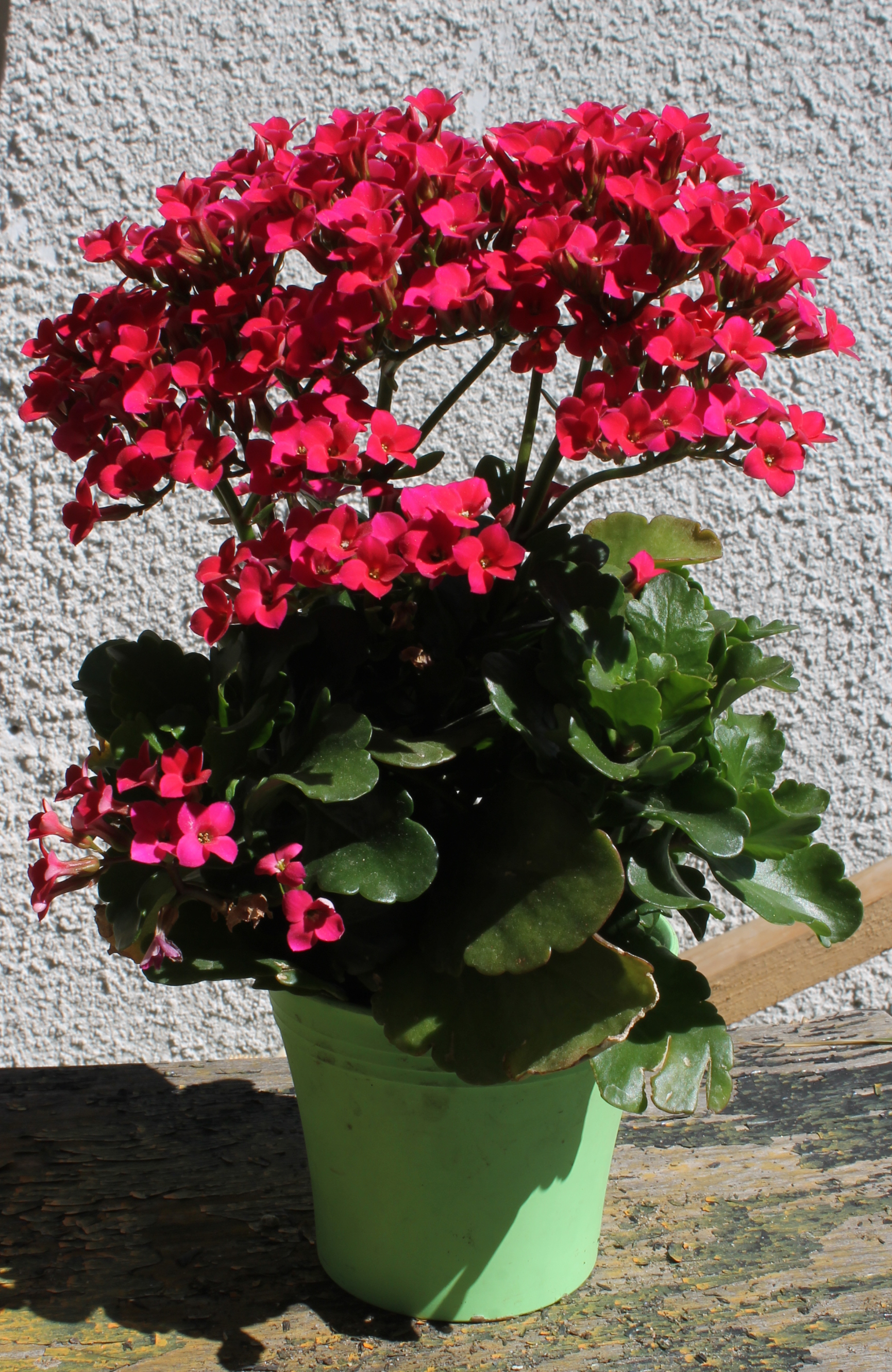
Kalanchoes are succulent plants that store water in their thick fleshy leaves, which gives them strong drought tolerance for a flowering houseplant. A healthy Kalanchoe wants water every 2–3 weeks when the soil has dried completely between waterings. The plant’s number-one killer is overwatering — constantly wet soil causes root rot quickly, often fatally. The signs of thirst are subtle: leaves may wrinkle slightly after weeks of dryness. Overwatering shows faster: yellow lower leaves, soft mushy stem bases. For Kalanchoes, water sparingly and let the soil dry completely between sessions.
02 · HOW LONG
How long can a Kalanchoe go without water?
A Kalanchoe goes 3–4 weeks without water in normal indoor conditions with no visible stress — the succulent leaves store enough water for long absences. With a self-watering device the duration extends further, but for a Kalanchoe the device introduces risk: constantly moist soil can trigger root rot, which is this plant’s main cause of death. The honest math here: more water means more risk, not more safety, for a Kalanchoe.
03 · THE OPTIONS
Best methods for a Kalanchoe on vacation
Because Kalanchoes are drought-tolerant succulents, the best methods for them on a trip are the simplest. Here’s how they compare for this plant specifically.
01 · One deep soak
Often enough
For drought-tolerant plants on trips under 2 weeks, a thorough watering before leaving is often all you need. No device required.
02 · Terracotta spike
Insurance
If you want peace of mind, the AcquaTerra’s 17.5 oz reservoir releases only as soil dries — can’t over-water a drought-tolerant plant.
03 · Watering globe
Risky
Globes can dump water into already-dry soil — the fastest way to rot a drought-tolerant plant. Avoid for these species.
04 · Move & forget
Best prep
Shifted out of direct sun and into a cool room, drought-tolerant plants often clear 3+ weeks unaided. The room setup matters more than the device.
The terracotta spike leads for this plant because its clay releases water only as the soil dries — matching supply to the plant’s actual needs.1
04 · THE SETUP
Setup — 5 minutes for a Kalanchoe
The AcquaTerra installs in about five minutes per pot. Its 17.5 oz reservoir covers 10–16 days for a typical Kalanchoe in normal indoor conditions.
01 · Check the soil
If the soil is already damp, skip the spike entirely — Kalanchoe can over-water as easily as under-water.
02 · Water lightly first
Water the Kalanchoe only if the top inch is dry. A drought-tolerant plant prefers to leave on the dry side.
03 · Soak the spike
If you do install one, pre-soak the terracotta for 15 minutes so it releases properly.
04 · Insert near the edge
Use the dibber to open a hole away from the stem. Seat the spike, firm the soil around it.
05 · Fill partially
Fill the reservoir only two-thirds full for drought-tolerant plants — less risk of over-supplying.
For drought-tolerant plants
Most need no spike for trips under 2 weeks. A spike is insurance, not necessity, for these species.
05 · THE PREP
A pre-trip checklist for your Kalanchoe
These small adjustments lower the Kalanchoe’s water demand so the reservoir lasts longer. Apply them on departure day.
- Move plants out of direct sun. Bright indirect light keeps plants alive without driving the rapid transpiration that empties a reservoir early.
- Lower the thermostat a few degrees. Cooler rooms transpire more slowly, so the same reservoir lasts noticeably longer over the trip.
- Group pots together. Clustered plants raise the humidity around one another, slowing evaporation from soil and leaves alike.
- Skip fertilizer before you leave. Don’t feed within a couple of days of departure; concentrated feed in drying soil can scorch roots.
- Water thoroughly on departure day. A self-watering spike maintains moisture; it works best starting from a properly watered pot.
06 · WHEN IT GOES WRONG
Troubleshooting your Kalanchoe on return
A Kalanchoe that returned looking identical is the normal outcome — this succulent rarely shows trip damage. Yellow lower leaves with soft stem bases on return signal overwatering and root rot, which is far more dangerous than drought stress in Kalanchoes. Cut affected stems back to firm tissue, let the plant dry out completely, and resume sparse watering. Dropped flowers are normal — the bloom cycle has a natural end. Slightly wrinkled leaves are mild thirst and recover with one good watering.
How to water a Kalanchoe while away usually means doing very little. The plant’s succulent water storage means almost any vacation length is within its normal tolerance. Water once if the soil is dry, move it out of direct sun if convenient, and leave. The most damaging thing you can do to a Kalanchoe before a trip is over-prepare it with a watering device that keeps the soil constantly moist — that’s when this plant fails.
FAQ · COMMON QUESTIONS
Frequently Asked Questions
How do you water a Kalanchoe while away?
Water it once before leaving only if the soil is dry — a Kalanchoe handles 3–4 weeks unaided easily. A self-watering system is rarely needed and risks root rot, which is this plant’s main killer. Under-watering is far safer than over-watering for a Kalanchoe.
How long can a Kalanchoe go without water?
A Kalanchoe goes 3–4 weeks without water in normal indoor conditions with no visible stress. The succulent leaves store enough water for long absences. Many Kalanchoe owners forget watering for similar stretches in normal life with no consequences.
Do Kalanchoes need a watering spike for vacation?
Almost never — a Kalanchoe’s succulent water storage handles long absences naturally. A self-watering device can actually harm the plant by keeping the soil constantly moist, which triggers root rot. For Kalanchoes, less is genuinely safer than more.
How often should you water a Kalanchoe?
Water a Kalanchoe when the soil is completely dry — typically every 2–3 weeks in summer and every 3–4 weeks in winter. Always check the soil before watering. Overwatering is by far the most common cause of death for this plant; drought is rarely fatal.
Can you overwater a Kalanchoe with a self-watering system?
Yes, easily — this is the main risk of using any watering device on a Kalanchoe. The roots need long dry periods between waterings, and a device that supplies water continuously can cause root rot quickly. For Kalanchoes, a deep pre-trip watering is usually safer than any device.
What does an overwatered Kalanchoe look like?
Yellow lower leaves, soft or mushy stem bases, and black rot at the soil line indicate root rot from overwatering. The plant may collapse. If you spot this on return, cut affected stems back to firm tissue, let the plant dry out completely, and resume sparse watering.
Why has my Kalanchoe stopped flowering?
Kalanchoes have a natural bloom cycle that ends with flowers fading regardless of care — this isn’t a sign of failure. To trigger reblooming, the plant needs roughly 6 weeks of long dark periods (14+ hours) per night. The leaves and plant itself stay healthy between bloom cycles.
Should I move my Kalanchoe before vacation?
Moving it out of direct sun helps slightly, but Kalanchoes tolerate a wide range of conditions and don’t need much fuss. The most useful pre-trip step is making sure the soil isn’t already wet — if it is, skip pre-trip watering entirely.
References
01 Bainbridge, D. A. (2001). “Buried clay pot irrigation: a little known but very efficient traditional method of irrigation.” Agricultural Water Management, 48(2), 79–88. DOI: 10.1016/S0378-3774(00)00119-0
02 University of Minnesota Extension. “Watering houseplants.” UMN Extension. extension.umn.edu