

Watering Roses: A Complete Guide to Frequency and Method
Roses (Rosa) are not difficult plants, but they are particular about two things: how deeply they are watered, and where the water lands. Get both right and a rose is a long-lived, generous shrub; get them wrong and you end up with a bush that drops buds in July and defoliates from blackspot by August[1][2]. This complete guide to watering roses covers the frequency, the seasonal schedule, the six factors that genuinely change the numbers, the warning signs in both directions, and the base-watering method that keeps rose foliage dry.
Water established garden roses with a deep soak once or twice a week — roughly 1–2 inches of water total, including rainfall. In hot, dry weather move to twice weekly; in cool or wet spells, less. Always water at the base of the plant, never over the foliage, because wet leaves drive blackspot. Mulch the root zone to hold moisture, and expect container roses to need water far more often, sometimes daily in summer.
01 · THE SIMPLE ANSWER
How often to water roses
An established rose in a garden bed wants a deep soak one to two times per week, delivering roughly 1–2 inches of water including rainfall[1][3]. In hot, dry summer weather that becomes twice weekly — sometimes three times for sandy soils or newly planted bushes. In cool, damp conditions a rose may need no supplementary water at all for weeks.
Frequency matters less than depth. Roses are woody shrubs with a substantial root system reaching 18 inches or more into the soil, and they perform best when that whole root zone is recharged and then allowed to draw down before the next soak. A light daily sprinkle wets only the top inch, keeps the roots shallow, and leaves the plant dependent on you — the classic route to a rose that wilts every time you miss a day[4].
Check rather than assume. Dig or push a finger 2–3 inches into the soil beside the bush; if it is dry at that depth, it is time for a deep soak. Container roses are the exception to every rule here: limited soil volume plus full sun means they can need water daily in midsummer, and they should be checked every day rather than watered on a weekly rhythm.
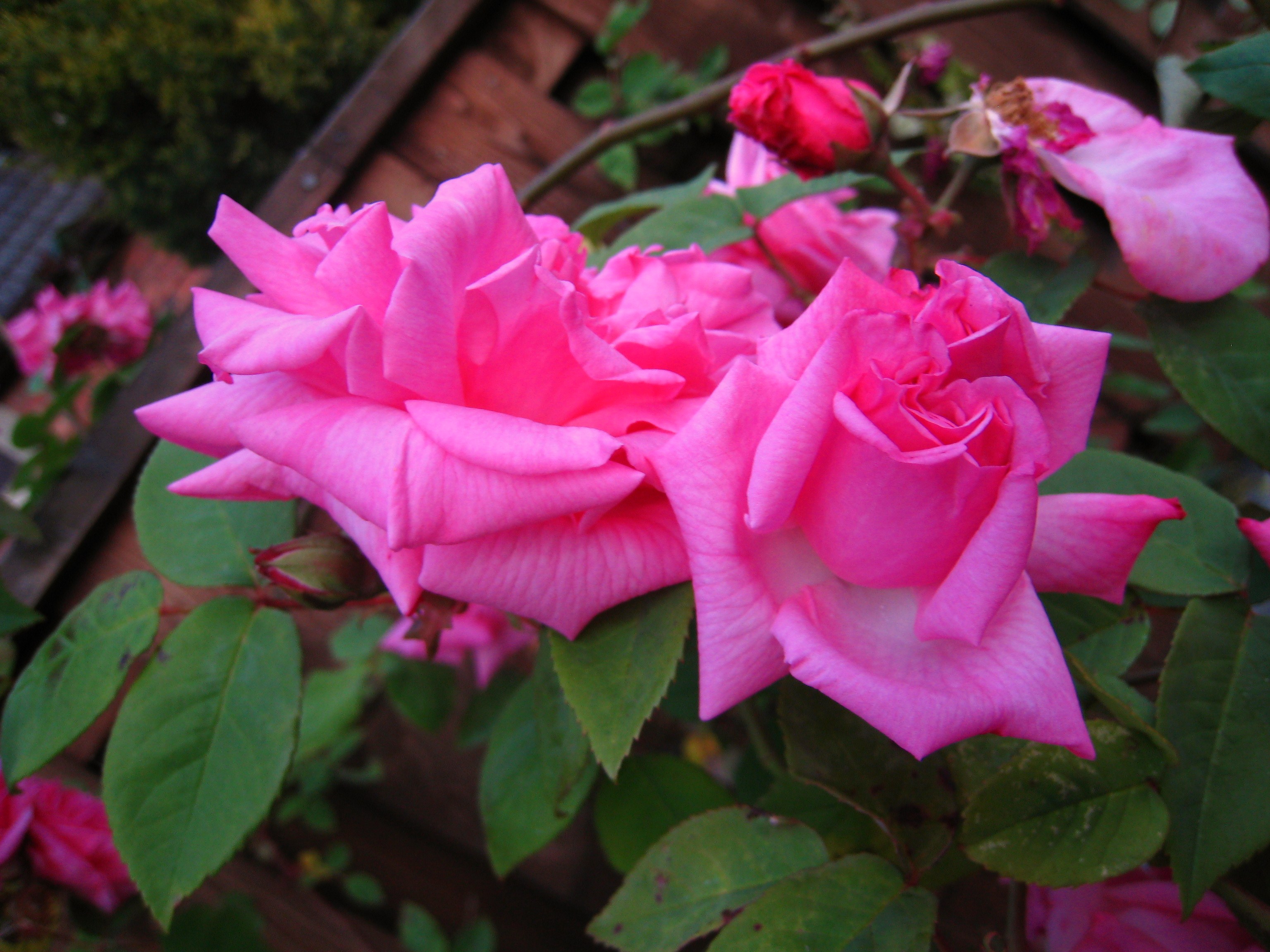
02 · THE BOTANY
Why roses need deep water and dry leaves
Roses are deciduous woody shrubs, not soft-tissue annuals. They do not collapse theatrically when thirsty; they respond to water stress by aborting buds, shrinking flowers, and shedding lower leaves — symptoms that appear slowly enough to be misread as feeding problems. Repeat-flowering varieties are especially sensitive, because each successive bloom flush is an expensive project the plant will simply cancel if water is short[5].
The root architecture explains the deep-watering advice. A mature rose sends roots well below the surface layer, and moisture at depth is what carries the plant through hot weeks between waterings. Soaking slowly and thoroughly encourages roots downward; sprinkling frequently trains them upward into the zone that dries first. The same principle explains why mulch matters so much: 2–3 inches of organic mulch over the root zone slows evaporation, moderates soil temperature, and keeps that deeper moisture available for longer[6].
Then there is the disease half of the equation, which is unique to roses among common garden shrubs. Blackspot (Diplocarpon rosae) spores need several continuous hours of leaf wetness to germinate and infect, and rose foliage is one of the most susceptible surfaces in the garden. Overhead watering — sprinklers, hose-end sprays, watering the whole bush from above — creates exactly those conditions, and doing it in the evening leaves leaves wet all night[2][7]. Watering roses at the base is not a refinement; it is the single most effective cultural disease control available.
Powdery mildew and rust follow related logic. Both thrive in humid, still air around a crowded bush, so airflow, sensible spacing, and open-centre pruning support the watering strategy rather than sitting apart from it.

03 · SEASONAL SCHEDULE
Rose watering schedule by season
Roses are hardy perennials with a clear annual cycle: leafing out and building in spring, flowering hard through summer, winding down in autumn, and dormant in winter. Water demand follows that cycle closely[3][8].
01 · Spring (Mar–May)
Once a week
New growth and first buds. One deep soak weekly if rainfall is short; mulch now, while the soil is still moist from winter.
02 · Summer (Jun–Aug)
1–2× per week
Peak demand through repeat bloom. Twice weekly in heat; containers may need daily water. Always at the base, in the morning.
03 · Fall (Sep–Nov)
Every 10–14 days
Growth slows and rain usually returns. Taper off, but give one good soak before the ground freezes in cold regions.
04 · Winter (Dec–Feb)
Rarely / none
Dormant. Rainfall normally suffices; only water in prolonged dry, mild winters or for container roses under cover.
04 · FACTORS THAT MATTER
Six factors that change how often you water roses
Heat and sun exposure: Roses want full sun, so summer heat drives their water use directly. A 90°F week can double the frequency compared with a mild, cloudy one, and beds against south-facing walls with reflected heat dry fastest of all.
Bed versus container: The biggest single difference. In-ground roses draw on deep soil moisture and can go a week between soakings; a rose in a pot has a fixed, small reservoir and may need water every day in midsummer. Use large containers — 12–15 inches minimum for a shrub rose — and check daily[9].
Soil type: Sandy soils drain quickly and need more frequent, smaller applications; clay holds water and needs slower, less frequent soaking to avoid waterlogging. Roses generally prefer a moisture-retentive but free-draining loam, and improving soil with compost pays back in reduced watering.
Mulch: A 2–3 inch layer of bark, compost or well-rotted manure over the root zone can cut watering frequency substantially by slowing evaporation, and it suppresses the weeds that compete for the same moisture. Keep it an inch clear of the stems[6].
Plant age and establishment: Newly planted bare-root and containerised roses need consistent water through their entire first growing season while roots extend into the surrounding soil. Established bushes of three years or more are far more resilient and can tolerate short dry spells.
Rose type and size: A vigorous climber or large English shrub rose carries much more leaf area than a patio or miniature rose and drinks accordingly. Repeat-flowering types need steadier moisture than once-flowering old garden roses, which coast after their single display.

05 · UNDERWATERING SIGNS
Signs your roses need water
Roses are stoic compared with soft-stemmed plants, so drought stress shows up in flowering and foliage before you see dramatic wilting[3]:
- Buds that dry up or fail to open. One of the earliest signals. A rose short of water aborts developing buds rather than finishing them, and open flowers are smaller and shorter-lived.
- Drooping leaves and soft new shoots. Young growth at the tips wilts first because it has the least woody support. Persistent morning droop means the root zone is genuinely dry.
- Yellowing and dropping lower leaves. Under drought stress a rose sheds its oldest foliage from the bottom of the bush upward, leaving bare lower canes.
- Dry, cracked, hydrophobic soil. When the bed pulls away from the crown and water runs off instead of soaking in, apply slowly in two or three stages to rewet the profile, then mulch.
06 · OVERWATERING SIGNS
Signs you have overwatered your roses
Roses dislike sitting in wet soil. Constant saturation starves roots of oxygen and opens the door to root rot, while frequent shallow watering — especially overhead — brings its own set of problems[2][10]:
- Yellow leaves with soil that never dries. Widespread yellowing on a bush in permanently damp ground points to waterlogging and oxygen-starved roots, not to thirst or a nutrient deficiency.
- Wilting despite wet soil. Damaged roots cannot take up water, so an overwatered rose can look thirsty. Check the soil before reaching for the hose — if it is soggy, stop watering and improve drainage.
- Blackspot spreading fast up the plant. Repeated overhead watering keeps foliage wet and lets blackspot lesions multiply, defoliating the bush from the bottom up by midsummer. Switch to base watering immediately and clear fallen leaves.
- Soft, dark tissue at the crown or in a container. Mushy stem bases and a sour smell from a pot signal root rot. Improve drainage, reduce frequency, and never leave a container rose standing in a full saucer.
The prevention is the same as the cure: fewer, deeper soakings at the base, free-draining soil, mulch, and morning timing so any splashed foliage dries within the hour.

07 · THE METHOD
How to actually water a rose
Water at the base, never overhead. Place the hose end, can spout, drip emitter or soaker line on the soil around the crown and let the water go in at ground level. Keeping rose foliage dry is the most important disease-prevention step in the whole rose calendar[7].
Go slow and go deep. For an established bush, that means a long, low-flow soak that wets the soil to at least 12–18 inches — several gallons applied over many minutes, not a 30-second blast. Water spread over the full root spread, not just at the stem, reaches more of the root system.
Water in the early morning. Cooler temperatures mean less evaporative loss, and any water that does reach the leaves dries quickly in the morning sun. Evening watering leaves foliage damp overnight, which is the ideal condition for blackspot infection.
Mulch after a thorough soak. A 2–3 inch layer of compost, bark or well-rotted manure over moist soil holds that water in, cools the root zone, and reduces both watering frequency and soil-splash spread of disease spores onto lower leaves. Keep the mulch off the stems themselves.
For container roses, water until it drains freely from the bottom, empty the saucer, and check the pot every day in summer. A large container, a light-coloured pot in very hot regions, and a buffered water supply at the root zone all reduce the risk of a rose drying out between waterings.
08 · TEMPERAMENT & QUICK FACTS
What roses are really like
Origin. Rosa is a genus of well over a hundred species in the family Rosaceae, native across the temperate Northern Hemisphere — Europe, Asia, North America and northwest Africa — where wild roses grow in hedgerows, scrub and open woodland edges[11][12]. Garden roses descend from centuries of hybridisation, most decisively the nineteenth-century crosses that introduced repeat flowering from Chinese species into European stock.
Personality. Roses have an undeserved reputation for fussiness. They are hardy, long-lived shrubs that mostly want sun, air, deep water and an annual prune. What they are is unforgiving of bad habits — shallow watering, overhead sprinkling, cramped planting — and generous when those habits are corrected. They do not signal distress dramatically; they simply stop flowering, which is why watering technique is worth getting right early.
Size. Enormous range. Miniature and patio roses stay under 2 feet, floribundas and hybrid teas typically run 2–5 feet, English shrub roses 4–6 feet, and climbers and ramblers can cover 10–30 feet of wall or tree. Water demand scales with canopy size, so a rambler needs far more than a patio rose in the same soil.
Toxicity. Good news for pet households: roses (Rosa species) are listed by the ASPCA as non-toxic to dogs, cats and horses. The thorns are the real hazard rather than the chemistry — site prickly varieties away from paths and play areas[13].
Cultivars. The main groups are hybrid teas (large single blooms on long stems), floribundas (clustered repeat flowers), English or David Austin shrub roses (old-rose form with modern repeat), climbers and ramblers, groundcover and landscape roses such as the Knock Out series, and miniature/patio types for containers. Disease-resistant modern landscape roses are the most forgiving of imperfect watering; hybrid teas the least. For a shorter frequency-focused reference see how often to water roses, and for the light half of the picture read rose light requirements.
ACQUA OLLA
Deep root-zone watering for roses in garden beds and large containers — moisture where the roots are, foliage left dry.
Shop Acqua Olla →Watering roses well is three habits repeated: soak deeply once or twice a week rather than sprinkling daily, put the water at the base in the early morning so foliage stays dry, and mulch the root zone to hold what you have applied. Scale up for heat, containers, and newly planted bushes, and let established roses draw on their deep roots the rest of the time. Then get the siting right: see rose light requirements.
Frequently asked questions about watering roses
How often should I water roses?
Give established garden roses a deep soak once or twice a week — about 1–2 inches of water including rainfall. Twice weekly in hot, dry weather; less in cool or wet spells. Container roses often need water daily in summer.
How much water does a rose bush need?
Roughly 1–2 inches per week, applied slowly enough to wet the soil 12–18 inches deep. Large climbers and shrub roses need more than patio or miniature types.
Should I water roses from above or at the base?
Always at the base. Wet foliage is what blackspot needs to infect, so overhead watering spreads disease. Water the soil around the crown, in the early morning, and mulch to limit soil splash.
What time of day is best to water roses?
Early morning. Less water is lost to evaporation, and any splashed foliage dries fast in the morning sun. Evening watering leaves leaves damp all night, which encourages blackspot and mildew.
How often to water roses in pots and containers?
Check daily in summer — container roses often need water every day in heat because the soil volume is small and the plant is in full sun. Use a large pot, mulch the surface, and water until it drains from the bottom.
Does mulch reduce how often I water roses?
Yes, considerably. A 2–3 inch layer of compost or bark over the root zone slows evaporation, keeps soil cooler, and suppresses competing weeds. Keep it an inch clear of the stems to avoid rot at the crown.
Can you overwater roses?
Yes. Constantly wet soil starves roots of oxygen and causes root rot — look for yellowing leaves with soggy soil and wilting despite wet ground. Water deeply but infrequently, and make sure the bed drains freely.
References
- [1] Royal Horticultural Society. (n.d.). Roses: watering and care / RHS Gardening. rhs.org.uk.
- [2] Clemson Cooperative Extension. (n.d.). Rose diseases. Home & Garden Information Center. hgic.clemson.edu.
- [3] University of Minnesota Extension. (2022). Growing roses in the home garden. extension.umn.edu.
- [4] Michigan State University Extension. (n.d.). Watering trees and shrubs deeply. canr.msu.edu.
- [5] Taiz, L., & Zeiger, E. (2010). Plant Physiology, 5th ed. Sinauer Associates.
- [6] Penn State Extension. (2021). Mulching landscape plants. extension.psu.edu.
- [7] Horst, R.K., & Cloyd, R.A. (2007). Compendium of Rose Diseases and Pests, 2nd ed. APS Press.
- [8] University of Wisconsin–Madison Division of Extension. (n.d.). Roses, Rosa spp. hort.extension.wisc.edu.
- [9] University of Florida IFAS Extension. (2020). Roses for Florida gardens. Gardening Solutions. gardeningsolutions.ifas.ufl.edu.
- [10] North Carolina State Extension. (n.d.). Rosa. NC Extension Gardener Plant Toolbox. plants.ces.ncsu.edu.
- [11] Royal Botanic Gardens, Kew. (n.d.). Rosa L. Plants of the World Online. powo.science.kew.org.
- [12] USDA, Agricultural Research Service. (2023). GRIN Taxonomy: Rosa. npgsweb.ars-grin.gov.
- [13] ASPCA. (n.d.). Rose (Rosa species) — non-toxic to dogs, cats and horses. Animal Poison Control. aspca.org.
- [14] Missouri Botanical Garden. (n.d.). Rosa — Plant Finder. missouribotanicalgarden.org.
- [15] Lambers, H., Chapin, F.S., & Pons, T.L. (2008). Plant Physiological Ecology, 2nd ed. Springer.