

Watering Lavender: A Complete Guide to Frequency and Method
Lavender (Lavandula angustifolia) is the plant most gardeners water to death. It looks delicate, it is sold in pots that dry out fast, and every instinct says a wilting Mediterranean shrub must be thirsty — but lavender is a drought-adapted sub-shrub from dry, rocky hillsides, and wet feet is the single biggest killer of established plants[1][2]. This guide covers watering lavender properly: how often, how deeply, how the seasons change it, and why sharp drainage matters more than any watering schedule you could write.
Water lavender deeply but infrequently — every 1–2 weeks once established, and much less in winter (often not at all for in-ground plants). Water new plants weekly through their first season while roots establish, then taper off. Let the soil dry well between waterings. Sharp drainage is non-negotiable: overwatering and heavy, wet soil are the number-one cause of lavender death. Lavender is listed by the ASPCA as mildly toxic to cats, dogs, and horses.
01 · THE SIMPLE ANSWER
How often to water lavender
An established lavender in the ground needs a deep soaking roughly every 1–2 weeks during dry summer weather — and in many temperate climates, rainfall alone covers it once the plant is settled[1][3]. Container lavender is the exception: pots dry far faster, so expect to water every 5–10 days in summer heat and to check more often than you would for a plant in a border.
The first year is different. A newly planted lavender has a small root ball and needs regular water — roughly weekly — through its first growing season so roots can push out into the surrounding soil. After that, taper deliberately. The goal of first-year watering is to build a plant that will not need watering[4].
Use the soil, not the calendar. Push a finger 2 inches into the soil, or lift a container to judge weight. Dry at depth means water thoroughly; damp means wait. When in doubt with lavender, wait — a week too late is a minor setback and a week too early, repeated, is root rot.
02 · THE BOTANY
Why lavender hates wet feet
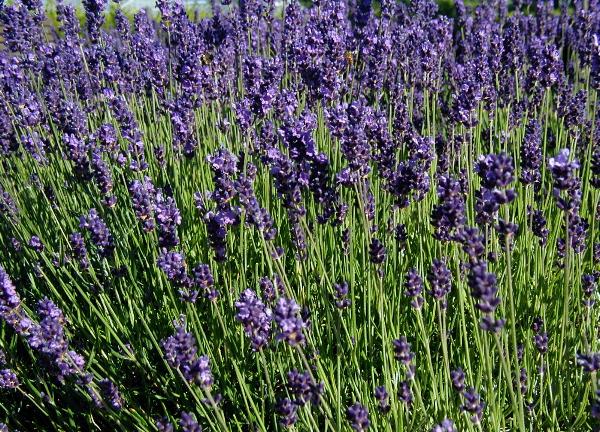
Lavandula angustifolia is a woody sub-shrub in the mint family (Lamiaceae), native to the dry limestone hillsides of the western Mediterranean, where it grows in thin, stony, alkaline soil that drains within minutes of a downpour[5][6]. Its whole anatomy is drought equipment: narrow leaves with a small surface area, a dense coat of reflective hairs that reduces transpiration, aromatic oils that slow water loss, and a deep, coarse root system that goes looking for moisture rather than waiting for it.
What lavender does not have is any tolerance for standing moisture around its roots and crown. Waterlogged soil excludes oxygen, and oxygen-starved lavender roots are rapidly colonised by soil-borne pathogens — Phytophthora and Armillaria root rot are the usual culprits, and once they take hold the plant rarely recovers[7]. This is why most lavender is lost in winter rather than summer: cold, wet, low-light months keep heavy soil saturated for weeks at a time.
The practical consequence is that drainage outranks scheduling. A lavender in gritty, free-draining soil is nearly impossible to overwater; a lavender in heavy clay can be killed by ordinary rainfall no matter how carefully you ration the hose. If your soil is dense, plant on a mound or raised bed, work in coarse grit, and mulch with pale gravel rather than bark or compost — organic mulches hold moisture right where lavender least wants it, against the crown[8].

03 · SEASONAL SCHEDULE
Lavender watering schedule by season
Lavender's water demand swings hard across the year, and the winter figure is the one people get wrong. These ranges assume an established plant in free-draining soil; new plantings need more in their first season[3][9].
01 · Spring (Mar–May)
Every 10–14 days
Growth resumes and buds form. Spring rain usually covers it — water only in genuinely dry spells.
02 · Summer (Jun–Aug)
Every 7–14 days
Peak demand, but still deep and infrequent. Containers need checking every 5–10 days in heat.
03 · Fall (Sep–Nov)
Every 2–4 weeks
Taper off sharply. Stop watering well before hard frost so plants go into winter on the dry side.
04 · Winter (Dec–Feb)
Rarely or never
In-ground plants need none. Pots: a splash only if bone-dry. Winter wet, not cold, is what kills lavender.
04 · FACTORS THAT MATTER
Six factors that change how often you water lavender
Soil type and drainage: The dominant variable, ahead of everything else. Gritty, sandy, or chalky soil drains in minutes and lavender thrives; heavy clay stays saturated for days and kills it. Amend with coarse grit and plant on a mound if your ground is dense.
Plant age and establishment: A first-year lavender needs roughly weekly water while its roots spread; a three-year-old plant in the ground may never need watering again in a normal summer. Watering an established lavender on a beginner's schedule is a common way to lose it.
Pot versus ground: Containers have no reservoir and no deep roots to draw on, so potted lavender needs water every 5–10 days in summer. Use terracotta with a large drainage hole, a gritty mix, and never a saucer left full of water.
Sun, heat, and wind: Full sun and a breeze are what lavender wants and also what dries it fastest. Ironically the sunniest position needs slightly more water and is by far the safest — sun and airflow keep the crown dry. See lavender light requirements.
Rainfall and humidity: In wet temperate climates rainfall usually supplies everything an established plant needs, and supplementary watering does more harm than good. High humidity also slows drying and raises the risk of fungal problems around the base.
Mulch and spacing: Pale gravel mulch reflects light, keeps the crown dry, and reduces evaporation from the soil below — the ideal combination. Bark or compost mulch holds moisture against the stem and invites rot. Space plants 18–36 inches apart so air can move between them.

05 · UNDERWATERING SIGNS
Signs your lavender needs water
Genuine drought stress in lavender is uncommon once a plant is established, but it does happen — especially in pots and in the first season[10]:
- Grey-green foliage that dulls and droops. The leaves lose their firmness and the whole plant looks tired — subtler than a wilting annual, so it is easy to miss in a container.
- Flower spikes fading and drying early. Blooms that should hold for weeks brown off quickly, and buds fail to open properly at the top of the spike.
- Crisp lower leaves and twig dieback. Prolonged drought in a container shows as brittle, brown lower foliage and small dead twigs inside the mound.
- A pot that feels weightless and soil pulling from the sides. Very dry gritty mix turns hydrophobic and water runs straight through. Stand the pot in a shallow basin for 20–30 minutes to rewet the root ball, then drain it fully.
06 · OVERWATERING SIGNS
Signs you’ve overwatered your lavender
This is the failure mode that matters. Overwatering and poor drainage kill more lavender than every other cause combined, and the symptoms are often mistaken for thirst[7][11]:
- Yellowing foliage in damp soil. Lavender leaves should be silver-grey. Yellowing, especially from the base upward with soil that stays wet, means roots are failing — not that the plant needs feeding.
- Wilting despite wet soil. The cruellest sign, because it looks exactly like drought. Rotted roots cannot take up water. Check the soil before you reach for the watering can — wet soil plus wilt means stop watering entirely.
- Blackened, mushy stems at the crown. Soft, dark tissue at soil level is crown and root rot, often with grey mould in humid weather. Affected plants seldom recover; take healthy cuttings from the top and replant elsewhere in better drainage.
- Soft, leafy growth with poor fragrance and few flowers. Too much water (often with too much feeding) pushes lush green growth at the expense of oils and blooms, and leaves the plant floppy and prone to disease.

The remedy is structural rather than schedule-based: improve drainage, lift and replant on a mound or in a raised gravel bed, swap organic mulch for grit, and stop watering while the soil dries. For the wider principles see how to stop overwatering houseplants.
07 · THE METHOD
How to actually water lavender
Water deeply and rarely. Give an established plant a thorough soak that wets the soil 8–12 inches down — roughly a gallon for a mature plant — then leave it alone for a week or two. Deep, infrequent watering trains roots downward; frequent shallow sprinkles keep them near the surface and make the plant permanently dependent[12].
Water at the base, never over the foliage. Wet leaves and a wet crown in still air invite grey mould and fungal dieback, which is precisely what lavender's open, sunny habit is designed to avoid.
Water in the early morning so any splash on the plant dries quickly through the day, and so the root zone is charged before the afternoon heat.
For containers, soak until water runs freely from the drainage hole, then let the pot drain completely and never leave it standing in a full saucer. Terracotta is the ideal material: it breathes, wicks excess moisture out of the mix, and matches lavender's preference for a dry root zone.
Do not feed while you water. Lavender flowers best in lean, low-fertility soil; rich feeding produces soft green growth, fewer spikes, weaker scent, and a plant far more vulnerable to the rots that follow overwatering.
08 · TEMPERAMENT & QUICK FACTS
What lavender is really like
Lavandula angustifolia is an evergreen woody sub-shrub in the mint family, native to the dry limestone hills of the western Mediterranean and hardy through roughly USDA zones 5–9[5][13]. Everything about its temperament follows from that origin: it wants sun, poor stony soil, sharp drainage, and moving air, and it is indifferent to drought but intolerant of wet.
As a plant to live with, lavender is refreshingly low-maintenance once you stop fussing over it. It needs no feeding, no rich compost, and very little water — but it does need one thing done properly every year: a prune after flowering, cutting back by about a third into soft green growth and never into bare old wood, which rarely reshoots. Do that and a plant stays dense and productive for 8–10 years; skip it and the shrub splays open, goes woody at the base, and is usually replaced within four or five. Expect a mature English lavender at 18–24 inches tall and wide, with dwarf cultivars such as 'Hidcote' staying compact and lavandins reaching 3 feet or more. It is also one of the best pollinator plants you can grow, alive with bees through midsummer.
On cultivars, 'Hidcote' is the deep-purple compact standard and 'Munstead' the earlier, softer-blue classic; 'Grosso' and 'Phenomenal' are lavandin hybrids (L. × intermedia) grown for size, later bloom, and oil yield; and L. stoechas, the tufted Spanish lavender, is showier but less hardy. All share the same drought-tolerant, drainage-obsessed watering profile. One note for pet households: the ASPCA lists lavender as toxic to cats, dogs, and horses due to linalool and linalyl acetate — toxicity is mild and problems are uncommon in the garden, but concentrated essential oil is a genuine hazard for pets[14].
For a quick-reference take on frequency alone, see our companion post on how often to water lavender, and pair it with lavender light requirements — sun and drainage are what make the watering easy.
ACQUA OLLA
Slow terracotta release delivers water deep at the roots — exactly where lavender wants it, and nowhere near the crown.
Shop Acqua Olla →Watering lavender is mostly an exercise in restraint. Water new plants weekly through their first season, then move to deep soakings every 1–2 weeks in summer and almost nothing in winter. Water at the base, in the morning, and only when the soil is genuinely dry. Above all, fix the drainage: in gritty, sunny, well-spaced ground, lavender is one of the toughest and longest-flowering plants in the garden. Related reading: lavender light requirements.
Frequently asked questions
How often should I water lavender?
Deeply every 1–2 weeks once established, and far less in winter — in-ground plants often need none at all. New plants need roughly weekly water through their first season while roots establish, then taper off.
How often to water potted lavender?
Every 5–10 days in summer heat, less in spring and autumn, and only if bone-dry in winter. Use terracotta with a gritty free-draining mix, soak until water runs out, and never leave the pot in a full saucer.
Can you overwater lavender?
Yes — it is the number-one cause of lavender death. Wet feet starve the roots of oxygen and invite root and crown rot. Sharp drainage matters even more than the schedule; when in doubt, wait another few days.
Why is my lavender turning yellow?
Almost always too much water or poorly drained soil. Healthy lavender is silver-grey; yellowing foliage with damp soil signals failing roots. Improve drainage, replant on a mound or in gravel, and stop watering while it dries.
Is lavender drought tolerant?
Very — once established. Its narrow hairy leaves and deep roots are built for dry Mediterranean hillsides, and mature plants in the ground often survive an entire summer on rainfall alone. First-year plants are not yet drought tolerant.
Should I water lavender in winter?
Established in-ground lavender needs no winter watering at all. Containers need a splash only if the mix is completely dry. Winter wet, not winter cold, is what kills lavender in temperate gardens.
Is lavender toxic to pets?
The ASPCA lists lavender as toxic to cats, dogs, and horses because of linalool and linalyl acetate. Garden plants cause problems only if eaten in quantity, but concentrated lavender essential oil is genuinely hazardous to pets.
References
- [1] Royal Horticultural Society. (n.d.). Lavender: growing and care / RHS Gardening. rhs.org.uk.
- [2] Missouri Botanical Garden. (n.d.). Lavandula angustifolia — Plant Finder. missouribotanicalgarden.org.
- [3] University of Minnesota Extension. (2021). Growing lavender in the home garden. extension.umn.edu.
- [4] Penn State Extension. (2021). Growing lavender. extension.psu.edu.
- [5] Royal Botanic Gardens, Kew. (n.d.). Lavandula angustifolia Mill. Plants of the World Online. powo.science.kew.org.
- [6] Upson, T., & Andrews, S. (2004). The Genus Lavandula. Royal Botanic Gardens, Kew.
- [7] Clemson Cooperative Extension. (n.d.). Lavender — diseases and root rot. Home & Garden Information Center. hgic.clemson.edu.
- [8] University of Wisconsin–Madison Division of Extension. (n.d.). Lavender, Lavandula angustifolia. hort.extension.wisc.edu.
- [9] Michigan State University Extension. (n.d.). Lavender production and irrigation. canr.msu.edu.
- [10] North Carolina State Extension. (n.d.). Lavandula angustifolia. plants.ces.ncsu.edu.
- [11] University of Florida IFAS Extension. (n.d.). Lavender and Mediterranean herbs. gardeningsolutions.ifas.ufl.edu.
- [12] Taiz, L., & Zeiger, E. (2010). Plant Physiology, 5th ed. Sinauer Associates.
- [13] USDA, Agricultural Research Service. (2023). GRIN: Lavandula angustifolia. npgsweb.ars-grin.gov.
- [14] ASPCA. (n.d.). Lavender (Lavandula angustifolia) — toxic to dogs, cats, and horses. aspca.org.
- [15] Lambers, H., Chapin, F.S., & Pons, T.L. (2008). Plant Physiological Ecology, 2nd ed. Springer.