

How Often to Water a Monstera
Monstera deliciosa — the iconic swiss cheese plant of every plant-shop photograph — is among the easier large tropical houseplants to grow well, provided you understand its watering preferences. It is not a thirsty plant in the way a peace lily or boston fern is. Nor is it drought-tolerant like a snake plant. Monsteras want a thorough soaking followed by a meaningful dry-down[1]. This guide tells you how often to water a monstera based on the botanical research, what specifically changes the schedule for monstera deliciosa, monstera adansonii (the mini monstera), and other Monstera species, and how to recognize what your plant is telling you when something is off.
Water a monstera every 7–14 days when the top 2–3 inches of soil are dry. Spring and summer: every 7–10 days. Fall and winter: every 10–14 days. Bright light, larger plants, and warmer rooms shorten the interval; dim corners and cool rooms extend it. Always test the soil with a finger before watering.
01 · THE SIMPLE ANSWER
How often to water a monstera
In typical indoor conditions — bright indirect light, household temperatures of 65–85°F, and standard houseplant soil — a monstera needs water every 7–14 days during the active growing season and every 10–14 days during cooler months[1][2]. This translates roughly to weekly watering in summer and every other week in winter, but the calendar is less reliable than the finger test.
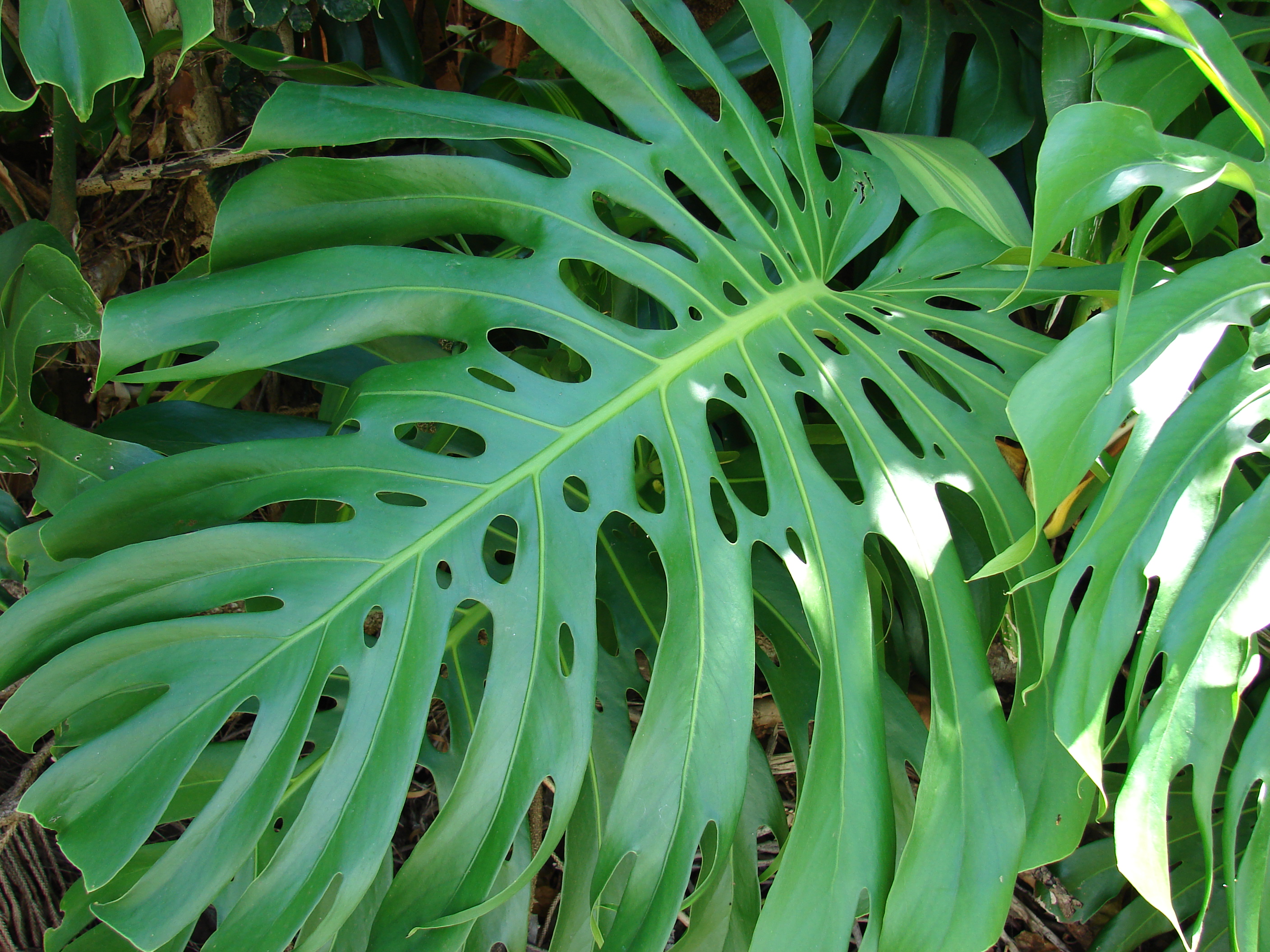
Monstera deliciosa is a hemiepiphytic vine native to the rainforests of southern Mexico through Panama[3][4]. In the wild, it begins life on the forest floor, climbs the nearest tree using clasping aerial roots, and matures high in the canopy where it produces the iconic fenestrated (split) leaves. The forest floor is humid and consistently moist; the canopy is brighter and dries faster between rains. Indoor monsteras prefer a balance between these — consistent moisture with regular dry-down rather than constantly wet roots.
Stick a finger 2–3 inches into the soil. If dry to that depth, water thoroughly. If still moist, wait several days and check again. This habit alone prevents most monstera problems.
02 · THE BOTANY
Why monsteras want soaks and dry-downs
Monstera roots are adapted for an environment that alternates between heavy rain and bright-canopy drying[4]. They prefer being saturated thoroughly and then drying meaningfully before the next saturation. Constantly moist soil prevents the air exchange roots need and creates the conditions for root rot pathogens like Phytophthora and Pythium to take hold[5].
The fenestrations in mature monstera leaves — the famous holes and splits — serve specific evolutionary purposes related to canopy life: reducing wind damage, letting light reach lower leaves, and increasing surface area without proportional increase in leaf mass[6]. These fenestrations matter for watering because they correlate with maturity: juvenile monsteras with solid heart-shaped leaves use less water than mature plants with large fenestrated leaves. As your plant matures and grows larger leaves, expect water use to increase.
Monstera adansonii — commonly sold as “mini monstera” or “swiss cheese vine” — is a related species with similar watering needs but a smaller, more vining habit[7]. (Note: “mini monstera” is also sometimes used for Rhaphidophora tetrasperma, which is in a different genus entirely but has similar care requirements.)
03 · SEASONAL SCHEDULE
Monstera watering schedule by season
Monstera is tropical and never truly dormant indoors, but growth slows meaningfully in winter as light decreases[8]. Below are typical intervals for an established monstera in an 8–12 inch pot.
01 · Spring (Mar–May)
Every 7–10 days
Active growth resumes. Larger new leaves emerge and water demand climbs.
02 · Summer (Jun–Aug)
Every 5–10 days
Peak growing season. Bright light and warmth drive faster soil drying.
03 · Fall (Sep–Nov)
Every 10–14 days
Growth slows as light decreases. Stretch intervals progressively.
04 · Winter (Dec–Feb)
Every 14–21 days
Minimal growth. Monstera uses meaningfully less water in cooler rooms with lower light.
04 · FACTORS THAT MATTER
Six factors that change how often you water a monstera
Light: The biggest variable. Monsteras in bright indirect light near a south or east-facing window use water roughly twice as fast as those in dim corners[8][9]. Direct hot afternoon sun is excessive; bright indirect or filtered light is ideal.
Plant size and maturity: A large mature monstera with multiple fenestrated leaves transpires substantially more than a young plant with solid juvenile leaves. A 6-foot tall monstera in a 12-inch pot may need watering every 5–7 days in summer; a small nursery plant in a 6-inch pot may need watering every 10–14 days.
Pot size and material: Larger pots dry slower; smaller pots dry faster. Unglazed terra cotta breathes and dries faster than plastic or glazed ceramic. A monstera being repotted up from 8-inch to 12-inch will need water less often initially while roots colonize the new soil mass.
Soil mix: Monsteras benefit from an aroid-friendly mix — standard houseplant soil amended with 25–30% perlite, orchid bark, or coco coir[10]. This provides drainage and air pockets that aroid roots prefer. Heavy soils retain too much water and increase root rot risk.
Humidity: Monsteras prefer 50–60% humidity but tolerate lower levels. In dry homes, leaf edges may brown but watering frequency itself doesn’t change dramatically. A humidifier helps appearance more than watering.
Aerial roots and supports: Monsteras provided with moss poles or other climbing supports develop more aerial roots, which can absorb moisture from humid air and reduce soil-root demand slightly. Climbing monsteras grown on moss poles often look more vigorous than those grown without supports.
05 · UNDERWATERING SIGNS
Signs your monstera needs water
Monsteras give clear early signals when soil is too dry, but those signals are easy to miss because the plant is structurally sturdy.[11]
- Drooping leaves and stems. The earliest visible underwatering sign. Stems lose firmness and leaves angle downward. Recovery is fast after watering — usually within hours.
- Soil pulls away from the pot edge. Bone-dry soil shrinks and leaves a visible gap around the pot wall. Water poured in may channel down the gap without wetting roots — bottom-soak the pot in a basin if this happens.
- Crispy or brown leaf edges. Chronic under-watering combined with low humidity browns leaf edges and tips. Affected damage is irreversible on those leaves but new growth will be normal.
- Yellowing of lower (oldest) leaves. Chronic mild drought causes lower leaves to yellow as the plant sacrifices them for moisture. This differs from overwatering yellowing, which can affect any leaf.
06 · OVERWATERING SIGNS
Signs you’ve overwatered your monstera
Overwatering is the leading cause of monstera decline[5][12]. The signs are subtler than wilting and can be slow to appear.
- Yellowing leaves with brown spots. Yellow leaves with dark brown spots — particularly on lower leaves — indicate root rot. Different from the gradual edge browning of underwatering.
- Soft or mushy stems. Stems should be firm. Softness near the soil line indicates rot reaching the crown.
- Persistent soil wetness. Soil that stays soggy for over a week post-watering signals poor drainage, oversized pot, or genuine overwatering. Reduce watering and confirm drainage holes are clear.
- Black-tinged stems or aerial roots. Healthy aerial roots are firm and green or brown. Black or mushy aerial roots near the soil line indicate root rot progression.
Recovery requires unpotting, trimming damaged roots, and repotting in fresh well-draining soil. See how to stop overwatering houseplants for the complete protocol.
07 · THE METHOD
How to actually water a monstera
Water thoroughly — until water drains from the pot’s holes — rather than giving partial amounts. For a typical 10-inch pot, this is roughly 3–4 cups (700–950 ml) per watering[10]. Even saturation matters for monstera because shallow watering encourages shallow roots.
Bottom watering works well for medium monsteras. Set the pot in a deep basin of water and let it absorb for 30–45 minutes, then drain. For very large monsteras in 14-inch+ pots, top watering with thorough application is more practical.
Empty saucers immediately after watering. Roots sitting in water rot quickly.
Use room-temperature water. Cold water can shock the rootball, particularly in winter. Monstera tolerates standard tap water but appreciates filtered or rainwater if your municipal supply has high mineral content.
08 · AWAY FROM HOME
Watering your monstera while you’re away
For trips up to 2 weeks, water deeply 24 hours before departure and your monstera will be fine. For 3–4 week absences, a slow-release watering tool like an AcquaTerra terracotta watering spike inserted into the soil provides consistent moisture without saturation risk[11].
For complete vacation protocols specific to monstera, see how to water a monstera while on vacation. For broader trip planning across multiple houseplants, see how to care for houseplants while on vacation and indoor plant watering system for monstera and philodendrons. For large floor planters with mature monsteras, see potted plant watering system for large floor planters.
The most common vacation watering mistake with monstera: drenching the rootball before leaving and additionally installing a self-watering system. This combination almost always causes root rot. Pick one approach. For trips longer than 4 weeks, ask a sitter or set up a proper self-watering system rather than over-watering before departure.
Monstera watering is straightforward once you accept the soak-and-dry-down pattern: thorough watering when the top 2–3 inches of soil are dry, weekly in summer, every 10–14 days in winter. Watch for drooping as your earliest thirst sign and yellow lower leaves with brown spots as your earliest overwatering warning. When in doubt, wait an extra day — monstera tolerates short droughts much better than chronic wet feet. For vacation specifics, see how to water a monstera while on vacation. For monstera and philodendron together, see indoor plant watering system for monstera and philodendrons.
Frequently asked questions
How often should I water my monstera?
Water a monstera every 7–14 days when the top 2–3 inches of soil are dry. Spring and summer: every 7–10 days. Fall and winter: every 10–14 days. Use the finger test rather than a strict calendar.
How do I know when my monstera needs water?
Stick a finger 2–3 inches into the soil. If dry to that depth, water. If moist, wait. Drooping leaves and stems are also a reliable early thirst signal.
How often to water a monstera deliciosa?
Same as other monstera species — every 7–14 days when topsoil is dry. Larger mature monstera deliciosa with fenestrated leaves use more water than juvenile plants with solid leaves.
How often should I water my monstera in winter?
Every 14–21 days in winter, sometimes longer in cool rooms or low light. Monstera growth slows substantially as days shorten.
How much water does a monstera need?
Approximately 3–4 cups (700–950 ml) per watering for a 10-inch pot, or enough to drain freely from the pot’s holes. Thorough infrequent watering is far better than frequent small amounts.
Can I water my monstera every week?
Weekly watering works for bright-light monsteras during spring and summer. For dim corners or winter, weekly is too often — use the finger test to confirm soil dryness before watering.
How often to water monstera adansonii?
Monstera adansonii follows the same schedule as monstera deliciosa: every 7–14 days when the top 2–3 inches of soil are dry. Smaller pots and trailing habit may dry slightly faster.
What happens if I overwater my monstera?
Root rot, marked by yellowing leaves with brown spots, soft mushy stems, and persistent soil wetness. Recovery requires unpotting, trimming damaged roots, and repotting in fresh well-draining soil. See how to stop overwatering houseplants for the full protocol.
References
- [1] Royal Horticultural Society. (n.d.). Monstera deliciosa / RHS Gardening. rhs.org.uk.
- [2] Missouri Botanical Garden. (n.d.). Monstera deliciosa — Plant Finder. missouribotanicalgarden.org.
- [3] Madison, M. (1977). A revision of Monstera (Araceae). Contributions from the Gray Herbarium of Harvard University, 207, 3–100.
- [4] Croat, T.B. (1994). The use of the new world Araceae as drug plants. Aroideana, 17, 6–31.
- [5] Daughtrey, M.L., & Benson, D.M. (2005). Principles of plant health management for ornamental plants. Annual Review of Phytopathology, 43, 141–169.
- [6] Muir, C.D. (2013). How did the swiss cheese plant get its holes? The American Naturalist, 181(2), 273–281.
- [7] Mayo, S.J., Bogner, J., & Boyce, P.C. (1997). The Genera of Araceae. Royal Botanic Gardens Kew.
- [8] Cervantes, A., et al. (2018). Light dynamics in tropical understory plants. Frontiers in Plant Science, 9, 1142.
- [9] Wolverton, B.C. (1996). How to Grow Fresh Air: 50 House Plants that Purify Your Home or Office. Penguin Books.
- [10] University of Florida IFAS Extension. (2018). Production of Monstera deliciosa as an indoor foliage plant. edis.ifas.ufl.edu.
- [11] Penn State Extension. (2020). Houseplant Care: Watering, Fertilizing, and Repotting. extension.psu.edu.
- [12] Lambers, H., Chapin, F.S., & Pons, T.L. (2008). Plant Physiological Ecology, 2nd ed. Springer.
- [13] USDA, Agricultural Research Service. (2023). GRIN: Monstera deliciosa. npgsweb.ars-grin.gov.
- [14] North Carolina State Extension. (2022). Monstera deliciosa. plants.ces.ncsu.edu.
- [15] Royal Botanic Gardens, Kew. (n.d.). Monstera deliciosa Liebm. Plants of the World Online. powo.science.kew.org.