

How Often to Water a Fiddle Leaf Fig: Schedule, Signs, and Factors That Matter
The fiddle leaf fig (Ficus lyrata) earned its difficult reputation honestly — it is genuinely fussier than most popular houseplants about consistent moisture, light placement, and stable temperature[1]. Most fiddle leaf fig problems trace back to inconsistent watering: alternating periods of bone-dry soil and over-soaked rootball cause the brown spots, leaf drop, and slow decline that owners often misdiagnose as light or humidity problems. This guide tells you how often to water a fiddle leaf fig based on the available horticultural research, what variables actually change the schedule, and the precise signals to watch for.
Water a fiddle leaf fig every 7–10 days when the top 2 inches of soil are dry. Consistency matters more than precision — alternating between soggy and bone-dry causes the brown spots and leaf drop fiddle leaf figs are notorious for. Adjust for season, light, and pot size, and use the finger test before watering.
01 · THE SIMPLE ANSWER
How often to water a fiddle leaf fig
In typical indoor conditions — bright indirect light, household temperatures of 65–80°F, and well-draining soil — a fiddle leaf fig needs water every 7–10 days during the active growing season and every 10–14 days during cooler months[1][2]. The keyword is consistency: fiddle leaf figs tolerate either schedule better than they tolerate erratic watering.
Ficus lyrata is a large evergreen tree native to lowland rainforests of West and Central Africa, from Cameroon to Sierra Leone[3][4]. In the wild it grows to 40–50 feet, often as an epiphyte that germinates in the crown of another tree and strangles its host. The native climate features warm temperatures (75–85°F), high humidity (60–80%), and predictable seasonal rain patterns. Indoor fiddle leaf figs don’t replicate this entirely but they perform best in conditions that approximate the steady, predictable moisture cycle of their native habitat.
Stick a finger 2 inches into the soil before each scheduled watering. Soil should be lightly dry at that depth but not powder-dry. Powder-dry soil indicates you waited too long; consistently wet soil indicates you watered too soon.
02 · THE BOTANY
Why fiddle leaf figs need consistency
Fiddle leaf figs are dramatic but predictable. Their large, broad leaves transpire substantial amounts of water through stomata, and the entire root system is calibrated for the steady, moderate moisture of African rainforest understory[5]. When soil dries too fully, the leaves develop the classic crispy brown edges or interior brown spots that owners panic about. When soil stays too wet, the same leaves develop dark wet-edged brown spots from the bottom up — the early stage of root rot.
This is why the difference between “every 7 days” and “every 10 days” matters more for fiddle leaf figs than for most plants. A monstera or pothos shrugs off a missed week. A fiddle leaf fig responds with leaf damage that takes months to grow out[6].
The plant’s genus Ficus contains over 800 species, including familiar relatives like the rubber plant (Ficus elastica), weeping fig (Ficus benjamina), and edible fig (Ficus carica)[7]. Fiddle leaf figs share with these relatives a vulnerability to sudden environmental changes: moving the plant, changing the watering schedule, or relocating it to a different room all trigger leaf drop as the plant rebalances. This is normal and recovers within weeks if conditions stabilize.
03 · SEASONAL SCHEDULE
Fiddle leaf fig watering schedule by season
Below are typical intervals for an established fiddle leaf fig in a 10–14 inch pot under standard indoor conditions[1][2].
01 · Spring (Mar–May)
Every 7–10 days
Growth resumes. New leaves emerge from the top, increasing water demand.
02 · Summer (Jun–Aug)
Every 5–10 days
Peak growth. Bright light and warm temperatures accelerate water use.
03 · Fall (Sep–Nov)
Every 10–14 days
Growth slows. Adjust intervals progressively downward.
04 · Winter (Dec–Feb)
Every 14–21 days
Minimal growth. Cool drafts and dry heating-season air can cause leaf drop — keep schedule consistent.
04 · FACTORS THAT MATTER
Six factors that change how often you water a fiddle leaf fig
Light: Bright indirect light is essential. Fiddle leaf figs in dim corners both grow slowly and water-cycle slowly, but they’re also vulnerable to overwatering because soil dries slower than expected[6]. South or east-facing windows with sheer curtains are ideal.
Pot size and material: Larger pots dry slower and retain moisture longer. Terracotta pots dry faster than plastic or glazed ceramic. A fiddle leaf fig in a 12-inch terracotta pot may need watering every 7 days; the same plant in a 12-inch glazed ceramic pot may need watering every 10 days.
Soil mix: Use a well-draining mix with significant aeration. Standard houseplant soil amended with 20–30% perlite or orchid bark works well[8]. Compacted or heavy soils retain too much water and increase root rot risk.
Humidity: Higher humidity (50%+) slows leaf transpiration and slightly stretches watering intervals. Dry homes — particularly during winter heating season — speed up watering by 1–2 days. Misting helps appearance but does not significantly change schedule.
Plant size and growth stage: Larger, more mature trees with more leaves transpire substantially more water. A nursery fiddle leaf fig in a 6-inch pot may need watering every 10–14 days; a 6-foot established tree in a 14-inch pot may need watering every 5–7 days in summer.
Drainage: Pots without drainage holes are inadvisable for fiddle leaf figs. Excess water has nowhere to go and the root rot risk rises dramatically. If using a decorative cachepot, always remove the inner pot for watering and drain fully before returning.
05 · UNDERWATERING SIGNS
Signs your fiddle leaf fig needs water
Fiddle leaf figs are vocal about thirst once you know what to look for. The signs reverse quickly with watering, unlike overwatering damage.[9]
- Drooping or wilting leaves. Leaves angle downward and lose firmness when soil is too dry. This is the earliest reversible sign — watering restores firmness within hours.
- Crispy brown leaf edges or tips. Chronic under-watering combined with low humidity browns leaf margins from the edges inward. Damage is permanent on affected leaves but new growth will be normal.
- Lower leaves dropping. The plant sacrifices oldest leaves first under chronic drought. A few dropped lower leaves is normal; consistent drop indicates a schedule problem.
- Soil pulls away from pot edges. Severely dry soil shrinks and gaps appear around the pot. Water will channel down the gap without saturating the rootball. Bottom-soak in a basin to rehydrate.
06 · OVERWATERING SIGNS
Signs you’ve overwatered your fiddle leaf fig
Overwatering is the leading cause of fiddle leaf fig decline[10][11]. The signs are harder to spot than underwatering because they appear gradually.
- Dark brown spots starting at leaf edges or veins. Distinct from the crispy tan/brown of underwatering. Overwatering spots are dark brown, often surrounded by yellow halos, and may have a wet appearance. These typically start on lower leaves and progress upward.
- Multiple yellow leaves at once. A single yellow leaf is normal aging. Several yellow leaves at once — especially from the middle or bottom of the plant — signals root rot.
- Persistent soil wetness. Soil that stays soggy for over a week post-watering indicates poor drainage, oversized pot, or chronic overwatering. Confirm drainage holes are clear and consider downsizing the pot.
- Foul or musty smell from soil. Decomposing roots produce a distinct musty or sulfurous odor. If detected, unpot immediately and inspect for rot.
Recovery requires unpotting, trimming damaged roots back to healthy white tissue, and repotting in fresh well-draining mix. Affected leaves don’t recover but the plant can. See how to stop overwatering houseplants for the complete protocol.
07 · THE METHOD
How to actually water a fiddle leaf fig
Water thoroughly until water drains from the pot’s holes. For a 12-inch pot, this is approximately 3–5 cups (700–1200 ml) per session[8]. Even saturation matters — partial watering encourages shallow rooting and causes uneven moisture distribution that fiddle leaf figs respond to with leaf damage.
Bottom watering works exceptionally well for fiddle leaf figs because it ensures even rootball saturation without splashing the trunk or leaf bases. Set the pot in a deep basin for 30–45 minutes, let the soil draw moisture up through drainage holes, then drain completely.
Drain saucers immediately after watering. Fiddle leaf figs sitting in standing water decline rapidly.
Use room-temperature water. Cold water can shock the rootball and trigger leaf drop. Fiddle leaf figs are relatively sensitive to mineral buildup, so filtered, distilled, or rainwater is preferable if your tap water is heavily chlorinated or high in fluoride. For more on consistent watering systems for fiddle leaf fig, see drip irrigation for indoor plants — fiddle leaf fig.
08 · AWAY FROM HOME
Watering your fiddle leaf fig while you’re away
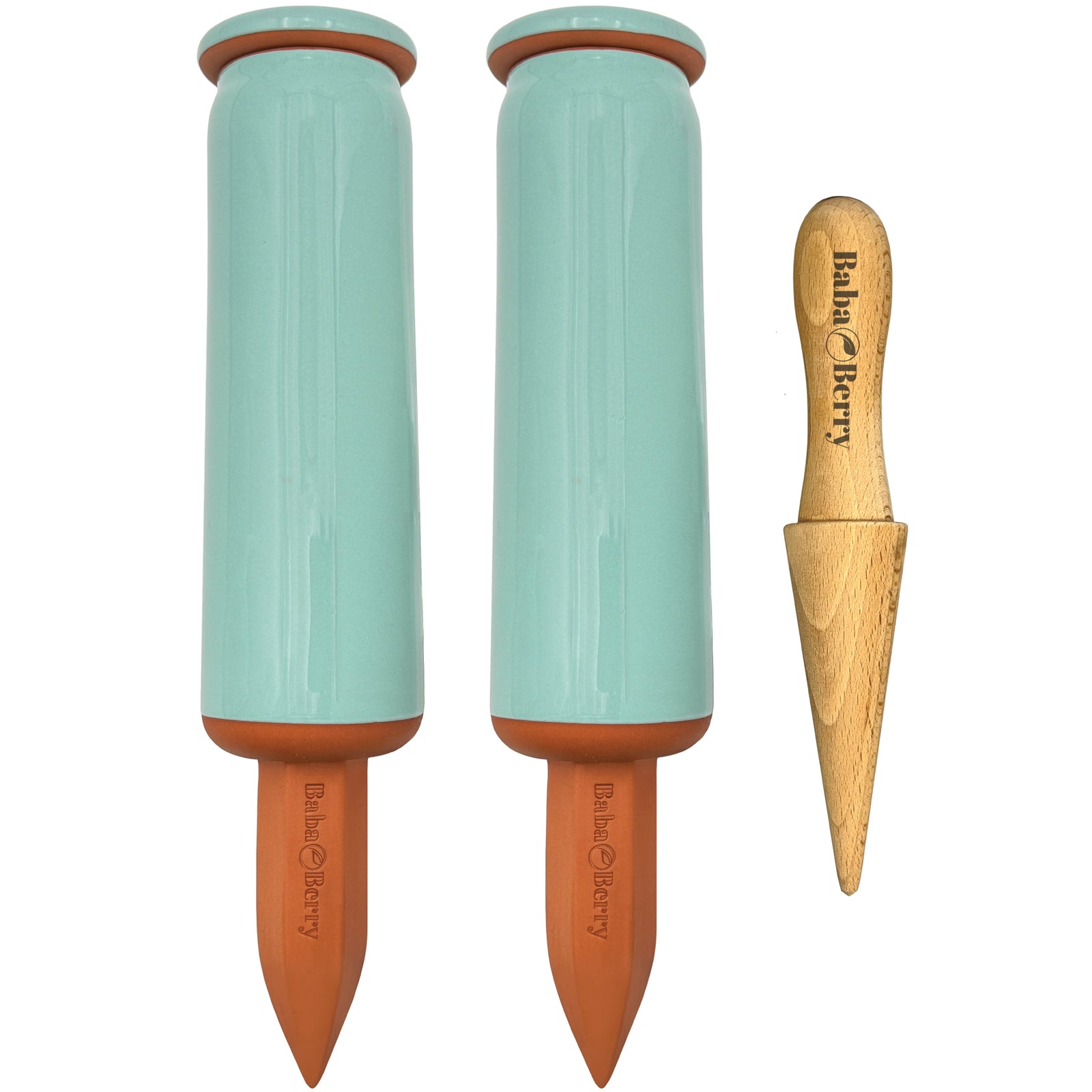
Fiddle leaf figs are among the most demanding houseplants to leave during travel because their schedule sensitivity means even a few days off-cycle can cause leaf damage. For trips up to 7–10 days, a deep watering 24 hours before departure usually suffices[9]. For longer trips, a slow-release watering tool like an AcquaTerra terracotta watering spike is genuinely valuable because consistency is exactly what fiddle leaf figs care about most.
For complete fiddle leaf fig vacation protocols, see how to water a fiddle leaf fig on vacation. For drip irrigation specific to fiddle leaf fig, see drip irrigation for indoor plants — fiddle leaf fig. For large floor planters generally, see potted plant watering system for large floor planters.
The most common vacation-watering mistake with fiddle leaf figs: drowning the plant before leaving. This causes root rot during your absence that won’t show symptoms until weeks later. Stick to a single normal watering 24 hours before departure, OR install a self-watering spike. Never both.
Fiddle leaf fig watering is genuinely about consistency: every 7–10 days in growing season, every 10–14 in winter, always when the top 2 inches of soil are dry. The plant tolerates either schedule far better than schedule alternation. Watch for drooping as your earliest thirst sign and dark brown leaf-edge spots as your earliest overwatering warning. When in doubt, wait. A thirsty fiddle leaf recovers in a day; an overwatered one may take months. For vacation specifics, see how to water a fiddle leaf fig on vacation. For overwatering recovery, see how to stop overwatering houseplants.
Frequently asked questions
How often should I water my fiddle leaf fig?
Water every 7–10 days when the top 2 inches of soil are dry. Spring and summer: every 7–10 days. Fall and winter: every 10–14 days. Consistency matters more than precision — alternating wet and dry causes brown spots.
How do I know when my fiddle leaf fig needs water?
Stick a finger 2 inches into the soil. If lightly dry, water. If still moist, wait 2–3 days and check again. Drooping leaves are also a reliable early thirst signal.
How often to water a fiddle leaf fig in winter?
Every 10–14 days, sometimes longer in cool rooms with low light. Avoid letting the plant dry out completely — consistency matters more than length of interval.
How often to water a fiddle leaf fig in summer?
Every 5–10 days during peak growth. Bright light, warmth, and active growth all increase water demand. Use the finger test rather than a strict calendar.
How much water does a fiddle leaf fig need?
Approximately 3–5 cups (700–1200 ml) for a 12-inch pot, or enough to drain freely from the pot’s holes. Thorough infrequent watering is far better than frequent shallow watering.
Should I mist my fiddle leaf fig?
Misting helps appearance and slightly raises local humidity but doesn’t significantly change watering frequency. Consistent soil moisture matters far more than misting for fiddle leaf fig health.
How much should I water my fiddle leaf fig?
Water thoroughly until liquid drains from the pot’s drainage holes. For a 12-inch pot, this is approximately 3–5 cups. Empty the saucer immediately after — fiddle leaf figs sitting in standing water decline rapidly.
What causes brown spots on fiddle leaf fig leaves?
Two distinct causes: crispy tan/brown spots at leaf edges indicate underwatering or low humidity. Dark wet-edged brown spots with yellow halos indicate overwatering and incipient root rot. Examine soil moisture to diagnose which one applies.
References
- [1] Royal Horticultural Society. (n.d.). Ficus lyrata / RHS Gardening. rhs.org.uk.
- [2] Missouri Botanical Garden. (n.d.). Ficus lyrata — Plant Finder. missouribotanicalgarden.org.
- [3] Berg, C.C., & Corner, E.J.H. (2005). Moraceae — Ficeae. Flora Malesiana, Series I, Volume 17, Part 2.
- [4] Burrows, J., & Burrows, S. (2003). Figs of southern and south-central Africa. Umdaus Press.
- [5] Janzen, D.H. (1979). How to be a fig. Annual Review of Ecology and Systematics, 10, 13–51.
- [6] University of Florida IFAS Extension. (2017). Ficus lyrata — Fiddle-leaf Fig. edis.ifas.ufl.edu.
- [7] Royal Botanic Gardens, Kew. (n.d.). Ficus lyrata Warb. Plants of the World Online. powo.science.kew.org.
- [8] Mason, R. (2018). Production practices for indoor Ficus lyrata. HortScience, 53(8), 1182–1188.
- [9] Penn State Extension. (2020). Houseplant Care: Watering, Fertilizing, and Repotting. extension.psu.edu.
- [10] Daughtrey, M.L., & Benson, D.M. (2005). Principles of plant health management for ornamental plants. Annual Review of Phytopathology, 43, 141–169.
- [11] Sosnowski, J., et al. (2022). Indoor Ficus species water-use under controlled conditions. Scientia Horticulturae, 295, 110888.
- [12] Lambers, H., Chapin, F.S., & Pons, T.L. (2008). Plant Physiological Ecology, 2nd ed. Springer.
- [13] North Carolina State Extension. (2022). Ficus lyrata. plants.ces.ncsu.edu.
- [14] USDA, Agricultural Research Service. (2023). GRIN: Ficus lyrata. npgsweb.ars-grin.gov.
- [15] Henley, R.W., et al. (1991). Foliage Plant Research at the University of Florida. UF/IFAS.