

Using Ollas for Herb Gardens, Indoor and Outdoor
Herb gardens are split right down the middle when it comes to olla irrigation. On one side: thirsty culinary herbs like basil, parsley, cilantro, and chives that love consistent moisture and produce dramatically better with ollas. On the other side: Mediterranean herbs like rosemary, lavender, sage, and thyme that evolved in dry rocky soils and actually suffer from constant moisture. Mixing them in the same olla zone is a common mistake. This guide covers which herbs go where, and the setup for both.
THE SHORT VERSION
01 · THE HERB DIVIDE
Two herb groups, two watering needs
The herbs people grow at home fall into two roughly equal-sized camps with opposite watering preferences. The first group — thirsty herbs — comes from temperate, moist climates and evolved with consistent water availability. Basil, parsley, cilantro, chives, mint, and dill all fall here. These herbs become bitter, bolt early, or wilt visibly the moment their soil dries out, and they produce dramatically more leaf when water supply is constant.
The second group — Mediterranean herbs — comes from dry, rocky, sun-baked hillsides around the Mediterranean basin. Rosemary, lavender, sage, thyme, oregano, and marjoram all evolved to survive long dry summers. Constant soil moisture from an olla isn’t a kindness for these plants; it’s a stress that causes root rot, fungal disease, and weak flavor (Mediterranean herbs concentrate their essential oils when stressed, which is exactly what gives them their flavor).

02 · HERBS THAT THRIVE WITH OLLAS
Thirsty herbs that benefit most
Basil is the headline beneficiary. Inconsistent watering causes basil to bolt (send up flower spikes), which signals the end of leaf production. Olla irrigation keeps the soil moisture steady, dramatically extending the productive harvest season. Many basil growers report tripling their season-long harvest with olla irrigation compared to hand watering.
Parsley and cilantro are similar — both bolt under heat stress and inconsistent watering. Chives and mint are less dramatic but produce thicker, more tender leaves with constant moisture. Dill grows taller and longer-stemmed. For broader herb watering background, see how to water an indoor herb garden.
03 · HERBS THAT DON’T BELONG
Mediterranean herbs to keep out of the olla zone
The four cards below cover the main herb pairings and where each belongs in your garden.
01 · Basil
Olla pairing
The headline beneficiary. Olla irrigation triples productive harvest by preventing the bolt cycle.
02 · Parsley / cilantro
Olla pairing
Both bolt under inconsistent watering. Constant olla moisture extends harvest season dramatically.
03 · Rosemary / lavender
Keep away
Mediterranean herbs prefer dry-down cycles. Plant outside the olla wetted zone or in a separate dry-side bed.
04 · Mint
Olla pairing
Thrives with constant moisture. Plant in a buried container to keep mint from spreading invasively through the bed.
04 · SETUP FOR HERB BEDS
How to install an olla in an herb garden
Herb beds are usually smaller than vegetable beds — often 2×4 or 3×3, sometimes a half whiskey barrel or large planter. A single 1.25-gallon Acqua Olla covers most herb beds completely. The install follows the standard process. For broader install guidance, see how to install an olla in a raised bed, pot, or garden.
01 · Plan the bed split
Decide where thirsty herbs and Mediterranean herbs will go. Plant thirsty within 12–18 inches of the olla; Mediterranean at 24+ inches or a different bed.
02 · Loosen herb-bed soil
Herbs do best in light, well-draining soil. Loosen 8–10 inches deep before installation.
03 · Pre-soak the olla
Submerge 15–30 minutes to prime the clay before burial.
04 · Install and backfill
Bury up to the neck, backfill firmly with tamped soil. Standard installation.
05 · Plant thirsty herbs close
Basil, parsley, cilantro, chives within 12–18 inches of olla center. Stagger plant heights for visual appeal.
Plant Med. herbs at distance
Rosemary, lavender, sage, thyme, oregano at 24+ inches from the olla, or in a separate dry-side section.
05 · HERB-SPECIFIC PREP
Get the bed ready for herbs
Herb gardens benefit from a few specific prep steps before the olla goes in.
- Sort herbs by water preference. Thirsty group (basil, parsley, cilantro, chives, mint, dill) goes in the wetted zone. Mediterranean group (rosemary, lavender, sage, thyme, oregano) goes outside it.
- Use loose, well-draining soil. Herbs hate heavy clay or compacted soil. Amend with compost and perlite for better structure.
- Plan for harvesting. Don’t bury the olla so deep that harvesting nearby plants disrupts it. Mark the location with a stake or stone.
- Don’t overwater Mediterranean herbs. Even outside the olla zone, the wetted soil can spread slowly. Keep Mediterranean herbs in a clearly drier section of the bed.
- Mulch the thirsty side. Cool, consistent soil temperature helps basil and parsley produce. Mulch the wetted zone but leave the Mediterranean zone bare.
06 · INDOOR HERB GARDENS
Adapting ollas for kitchen counter herbs
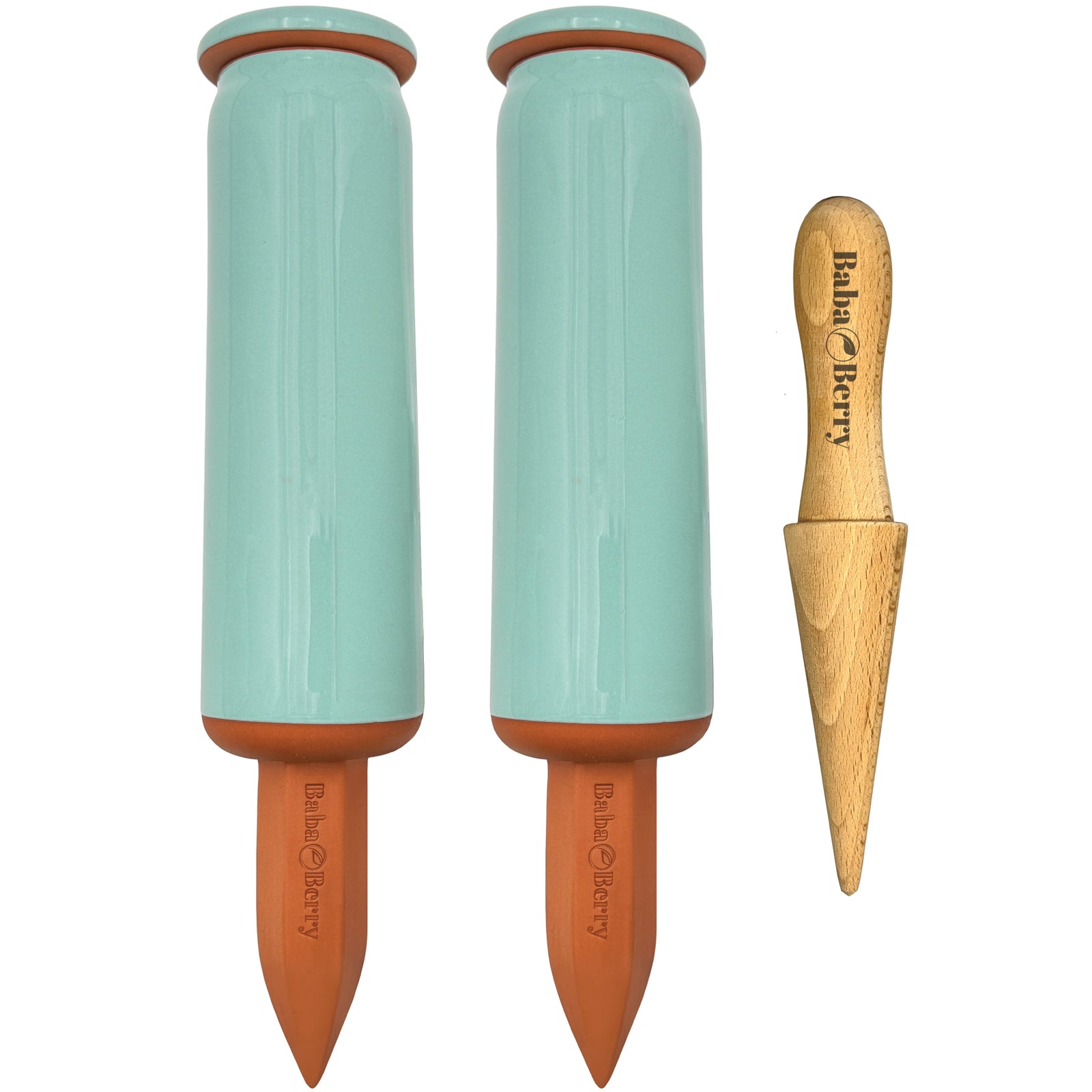
Indoor herb gardens almost always use smaller containers — 6 or 8-inch pots on a windowsill, narrow rectangular planters on a counter. These are too small for a full olla. For indoor herb pots, an AcquaTerra terracotta spike is the right tool — same slow-release mechanism, scaled to the container size. For deeper context on indoor watering systems, see olla irrigation for indoor plants.
If you have a large indoor herb planter (16+ inches), the Acqua Olla works there. For most kitchen counter setups, plan on AcquaTerra spikes for the thirsty herbs and just hand-watering the Mediterranean ones. For the broader indoor question, see ollas for indoor plants — when they work and when they don't.
Herb gardens with ollas work when you respect the divide between thirsty and Mediterranean herbs. Set them up in separate sections and both groups thrive. For broader herb watering guidance, see how to water an indoor herb garden. For indoor herb pots, see ollas for indoor plants — when they work and when they don't.
FAQ · COMMON QUESTIONS
Frequently Asked Questions
Do ollas work for herb gardens?
Yes — for thirsty herbs like basil, parsley, cilantro, chives, mint, and dill. Mediterranean herbs (rosemary, lavender, sage, thyme, oregano) prefer dry-down cycles and shouldn’t be planted in the olla’s wetted zone.
Why does basil love olla irrigation?
Basil bolts (sends up flower spikes that end leaf production) when soil moisture fluctuates. Olla irrigation keeps soil moisture stable, dramatically extending productive harvest season. Many growers report 3× the season-long harvest.
Can I plant rosemary near an olla?
Not in the wetted zone. Rosemary evolved in dry Mediterranean soils and develops root rot or weak flavor in constantly moist soil. Plant it 24+ inches from the olla, or in a separate dry-side bed.
What size olla for an herb garden?
One 1.25-gallon Acqua Olla covers most home herb beds (2×4 or 3×3). For larger herb plots, use the standard 4×4 raised-bed sizing: one olla per 16 square feet.
How often do I refill an olla for herbs?
Weekly in summer for thirsty herbs. Less in spring and fall. Herbs use less water than vegetables, so refill intervals are slightly longer than for tomato gardens.
Can I use an olla for an indoor herb garden?
Only for large indoor herb planters (16+ inches). For windowsill herb pots, use an AcquaTerra spike instead — same slow-release mechanism scaled to the smaller container.
Do ollas work for mint?
Yes, but plant mint in a buried container (a deep nursery pot with the bottom cut off, sunk into the bed) to keep it from spreading invasively through the rest of the herb garden.
What about cilantro and dill?
Both thrive with olla irrigation. Both also bolt quickly in heat, so combine the olla with afternoon shade if you’re in a hot climate — the consistent moisture extends but doesn’t eliminate bolt timing.
References
01 Bainbridge, D. A. (2001). “Buried clay pot irrigation: a little known but very efficient traditional method of irrigation.” Agricultural Water Management, 48(2), 79–88. DOI: 10.1016/S0378-3774(00)00119-0
02 University of Minnesota Extension. “Watering houseplants.” UMN Extension. extension.umn.edu