

How Often to Water a Lemon Tree: Schedule, Signs, and Factors That Matter
Lemon trees (Citrus × limon) are popular potted citrus for patios, sunrooms, and indoor growing — and they have specific watering needs that differ significantly from typical houseplants. Lemons prefer deep infrequent watering with substantial dry-down between sessions, the opposite of moisture-loving plants like ferns or peace lilies[1]. This guide tells you how often to water a lemon tree based on horticultural research, what changes the schedule for in-ground vs. container vs. indoor trees, and how to recognize the early signs of common watering problems.
Water established lemon trees deeply every 7–14 days in the ground or every 3–5 days in containers. Allow the top 2–3 inches of soil to dry between waterings. Reduce frequency in winter to roughly half summer rate. Citrus prefer thorough infrequent watering — daily light watering causes more problems than occasional drought.
01 · THE SIMPLE ANSWER
How often to water a lemon tree
Established outdoor in-ground lemon trees need deep watering every 7–14 days during the growing season, depending on climate and soil. Container lemon trees dry faster and need watering every 3–5 days in summer, sometimes daily in containers smaller than 14 inches during peak heat[1][2]. Indoor lemon trees follow a schedule similar to large container houseplants — every 5–10 days depending on light and pot size.
Citrus × limon is a hybrid species cultivated for thousands of years across the Mediterranean, Middle East, and Asia[3][4]. The various wild ancestors of cultivated lemon grew in subtropical climates with distinct wet and dry seasons, and the modern cultivated lemon retains a preference for deep infrequent watering rather than continuous moisture. Meyer lemons — technically a hybrid of lemon and mandarin orange — follow similar watering preferences with slightly higher cold tolerance[5].
Test soil moisture by sticking a finger 2–3 inches into the soil. If dry to that depth, water deeply. Lemon trees prefer a meaningful dry-down between waterings and suffer from chronically wet feet.

02 · THE BOTANY
Why lemon trees want deep infrequent watering
Citrus root systems develop best when soil dries between waterings, encouraging roots to grow deeper in search of moisture. Continuously wet soil produces shallow weak root systems and increases the risk of root rot caused by Phytophthora and similar pathogens[6][7]. This is why lemon trees do better with one deep weekly watering than with daily light sprinkles, despite being relatively thirsty plants overall.
Citrus fruit development is metabolically demanding and requires consistent water supply during the late stages of fruit growth and ripening. Stress from drought during fruit development causes fruit drop, smaller fruit size, and reduced juice content[8][9]. The balance is: deep infrequent watering throughout the year, with extra attention to consistency during fruit development.
Lemon trees in containers are more vulnerable to watering errors than in-ground trees because the limited soil volume holds less moisture buffer. A container lemon tree in a 12-inch pot may need watering every 3–5 days in summer; the same tree in the ground may need watering only every 10–14 days. Container size, material, and drainage all matter substantially more for potted citrus than for in-ground trees[10].
03 · SEASONAL SCHEDULE
Lemon tree watering schedule by season
Citrus water needs vary substantially across the year. Below are typical intervals for established trees in temperate climates[1][2].
01 · Spring (Mar–May)
Every 7–14 days (in-ground)
Growth resumes and flowering begins. Container trees may need watering every 3–5 days as temperatures rise.
02 · Summer (Jun–Aug)
Every 5–14 days
Peak growth and fruit development. Container trees in hot climates may need every 2–3 days; in-ground trees every 7–10 days.
03 · Fall (Sep–Nov)
Every 10–14 days
Fruit ripening. Maintain consistent moisture but reduce frequency as temperatures cool.
04 · Winter (Dec–Feb)
Every 14–21 days
Dormancy or near-dormancy. Indoor lemon trees still need regular watering, but outdoor trees in mild climates may need minimal supplemental water.
04 · FACTORS THAT MATTER
Six factors that change how often you water a lemon tree
Container vs. in-ground: The largest variable. Container lemons need substantially more frequent watering than in-ground trees because of limited soil volume.
Container size and material: Larger pots dry slower; smaller pots dry faster. Terracotta breathes and dries faster than plastic or glazed ceramic. A lemon tree in a 14-inch terracotta pot may need watering every 3 days; the same tree in a 14-inch glazed pot may need watering every 5 days.
Climate: Lemon trees in hot dry climates (California, Arizona, Texas) use water 2–3x faster than trees in humid mild climates (Florida, Gulf Coast). Wind also accelerates water use substantially.
Variety: Standard lemon trees and Meyer lemons follow similar schedules. Dwarf cultivars in small pots may need watering more frequently. Indoor lemon trees use less water than outdoor trees because of lower light and lower temperatures.
Mulching (for in-ground trees): 2–3 inches of mulch around the base reduces water demand by 30–50% through reduced evaporation and moderated soil temperature[11]. Container trees can’t be mulched as effectively but benefit from grouping with other potted plants to create humid microclimates.
Stage of fruit development: Trees actively developing fruit need more consistent moisture than vegetative trees. Drought stress during late fruit development causes fruit drop. Maintain especially consistent watering during the 8–12 weeks before harvest.
05 · UNDERWATERING SIGNS
Signs your lemon tree needs water
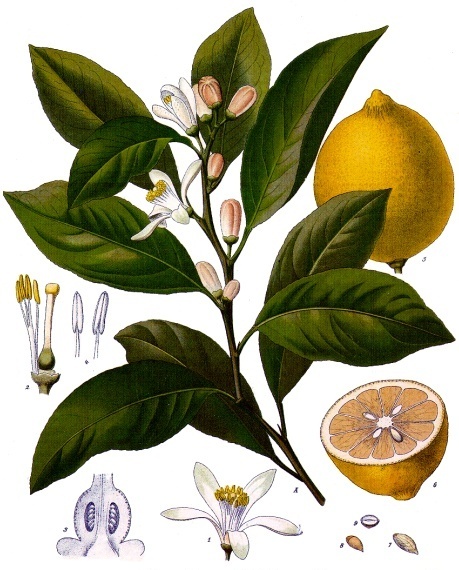
Lemon trees give clear visible thirst signals.[12]
- Leaves curl or roll inward. Earliest visible thirst sign. Leaves curl along their length to reduce evaporation surface area. Recovery within a day of deep watering.
- Leaves wilt and droop. More advanced drought stress. The plant’s overall posture changes — branches angle downward and leaves lose firmness.
- Fruit drop or fruit shrinks. Drought stress during fruit development causes the tree to abort developing fruit. Premature fruit drop or fruit that fails to grow normally indicates drought.
- Yellow leaves throughout the canopy. Distinct from chronic nutrient deficiencies, drought-induced yellowing affects multiple leaves at once and reverses with consistent watering.
06 · OVERWATERING SIGNS
Signs you’ve overwatered your lemon tree
Overwatering causes more lemon tree problems than underwatering, particularly for container trees[6][13].
- Yellow leaves starting from older inner leaves. Different from drought yellowing. Overwatering causes inner older leaves to yellow first as root function declines.
- Soft mushy crown or base of trunk. Crown rot from chronic moisture. Often unrecoverable in container trees.
- Wilting that doesn’t reverse with watering. A wilted lemon tree that stays wilted after deep watering has root damage. Unpot to inspect roots immediately.
- Persistent soil sogginess. Soil that stays wet for over 5–7 days post-watering indicates poor drainage or chronic overwatering. Improve drainage or downsize the pot.
Recovery requires reducing watering, improving drainage, and potentially repotting container trees in fresh well-draining soil. See how to stop overwatering houseplants for complete protocol.
07 · THE METHOD
How to actually water a lemon tree
Water deeply at the base of the tree, soaking the entire root zone. For container trees in 14-inch pots, this is approximately 3–5 cups (700–1200 ml) per watering. For in-ground trees, aim for slow application that reaches 12–18 inches deep across the drip line area[2].
Water at the base, not on foliage. Wet citrus leaves can promote fungal diseases including Alternaria brown spot. Drip irrigation, soaker hoses, watering wands at soil level, and olla irrigation all work well.
Water in the morning when possible. Morning watering reduces evaporation losses and lets any wet foliage dry quickly.
Olla irrigation works exceptionally well for outdoor potted citrus in hot climates — the slow consistent release matches what lemon trees prefer without daily watering. See ollas for hot weather and arid climates for arid climate setup and best plants for olla irrigation for general olla guidance. For broader summer outdoor watering, see plant watering devices for outdoor potted plants summer guide.
08 · AWAY FROM HOME
Watering your lemon tree while you’re away
Container lemon trees are the most demanding to leave during travel because of their limited soil volume and high water needs in summer heat. For trips of 3–5 days, deep watering 24 hours before departure plus heavy mulching usually suffices. For longer absences, drip irrigation on a timer or olla irrigation is genuinely necessary.
In-ground lemon trees handle absences better because of larger soil volume and deeper roots. Established trees in mild climates can go 2–3 weeks without supplemental water during the growing season; in hot dry climates, plan for irrigation during any absence longer than a week.
For complete outdoor potted plant watering devices and summer protocols, see plant watering devices for outdoor potted plants summer guide. For arid climate olla setup, see ollas for hot weather and arid climates. For large floor planters generally (relevant to indoor lemon trees), see potted plant watering system for large floor planters.
ACQUA OLLA
Deep slow release for potted citrus — perfect for hot climates and extended trips.
Shop Acqua Olla →Lemon tree watering is about depth and consistency: deep watering every 7–14 days for in-ground trees, every 3–5 days for containers, with adjustment for climate, season, and fruit development stage. Watch for leaf curl as your earliest thirst sign and inner-leaf yellowing as your earliest overwatering warning. Container trees in hot climates benefit substantially from olla irrigation. For broader olla guidance, see best plants for olla irrigation and ollas for hot weather and arid climates.
Frequently asked questions
How often should I water a lemon tree?
Established in-ground lemon trees: every 7–14 days deeply during the growing season. Container lemon trees: every 3–5 days in summer, sometimes daily in small pots during peak heat. Indoor lemon trees: every 5–10 days.
How do I know when my lemon tree needs water?
Stick a finger 2–3 inches into the soil. If dry to that depth, water deeply. Leaf curl is also a reliable early thirst signal.
How often to water a potted lemon tree?
Container lemon trees dry substantially faster than in-ground trees. Every 3–5 days in summer, sometimes daily for small pots. Check soil moisture daily during peak heat.
How often to water a Meyer lemon tree?
Meyer lemons follow the same schedule as standard lemon trees: every 7–14 days in-ground, every 3–5 days in containers. Meyer lemons have slightly better cold tolerance but similar water needs.
How much water does a lemon tree need?
For container trees in 14-inch pots, approximately 3–5 cups (700–1200 ml) per deep watering. In-ground trees need approximately 1–2 inches of water per week across the root zone during the growing season.
How often to water a lemon tree in winter?
Every 14–21 days during dormancy. Indoor lemon trees still need regular watering but at reduced frequency; outdoor trees in mild climates may need minimal supplemental water through winter.
Should I water my lemon tree every day?
Generally no — deep infrequent watering produces better trees than daily light watering. The exception is small container trees in hot climates, which may genuinely need daily watering due to limited soil volume.
Why are my lemon tree’s leaves curling?
Most commonly drought stress. Leaves curl inward to reduce evaporation when soil is dry. If soil is moist but leaves are still curling, check for pests or extreme temperature stress.
References
- [1] Royal Horticultural Society. (n.d.). Citrus growing / RHS Gardening. rhs.org.uk.
- [2] University of California Cooperative Extension. (2018). Citrus Production Manual. UC ANR Publication 3539.
- [3] Klein, J.D. (2014). Citron cultivation, history, and significance. Acta Horticulturae, 1043, 1–8.
- [4] Wu, G.A., et al. (2018). Genomics of the origin and evolution of Citrus. Nature, 554(7692), 311–316.
- [5] Goldschmidt, E.E. (1999). Citrus fruit growth and ripening. HortScience, 34(7), 1167–1170.
- [6] Graham, J.H., & Menge, J.A. (2000). Phytophthora-induced diseases. In Compendium of Citrus Diseases, 2nd ed. APS Press.
- [7] Daughtrey, M.L., & Benson, D.M. (2005). Principles of plant health management for ornamental plants. Annual Review of Phytopathology, 43, 141–169.
- [8] Garcia-Tejero, I., et al. (2010). Effects of regulated deficit irrigation on citrus orchards. Agricultural Water Management, 97(5), 614–622.
- [9] Castle, W.S., et al. (2010). Citrus rootstocks for Florida. UF/IFAS HS260.
- [10] Davenport, T.L. (2007). Reproductive physiology of mango. Brazilian Journal of Plant Physiology, 19(4), 363–376.
- [11] Bot, A., & Benites, J. (2005). The Importance of Soil Organic Matter. FAO Soils Bulletin 80.
- [12] University of Florida IFAS Extension. (2019). Lemon, Citrus limon. edis.ifas.ufl.edu.
- [13] Lambers, H., Chapin, F.S., & Pons, T.L. (2008). Plant Physiological Ecology, 2nd ed. Springer.
- [14] Texas A&M AgriLife Extension. (2018). Growing citrus in containers. aggie-horticulture.tamu.edu.
- [15] USDA, Agricultural Research Service. (2023). GRIN: Citrus limon. npgsweb.ars-grin.gov.