

How Often to Water Sunflowers: Schedule, Signs, and Factors That Matter
Sunflowers (Helianthus annuus) are surprisingly drought-tolerant once established — their long taproots can reach 6–8 feet down to access deep soil moisture. But getting them to that established state requires consistent watering as seedlings and during early development[1][2]. This guide tells you exactly how often to water sunflowers based on agronomic research, what changes the schedule from seedling stage to flowering, and how to recognize the signs that your sunflowers need different watering.
Water sunflowers deeply once per week (about 1 inch of water) once established. Seedlings and newly transplanted sunflowers need watering every 2–3 days. Container sunflowers need more frequent watering — every 2–4 days in summer heat. Established field sunflowers can go 10–14 days between deep waterings.
01 · THE SIMPLE ANSWER
How often to water sunflowers
Established sunflowers need approximately 1 inch of water per week during the growing season, delivered as one deep watering every 7–14 days rather than daily light sprinkles[1][3]. Container-grown dwarf sunflowers and very young plants need more frequent watering — every 2–4 days for containers, every 2–3 days for seedlings.
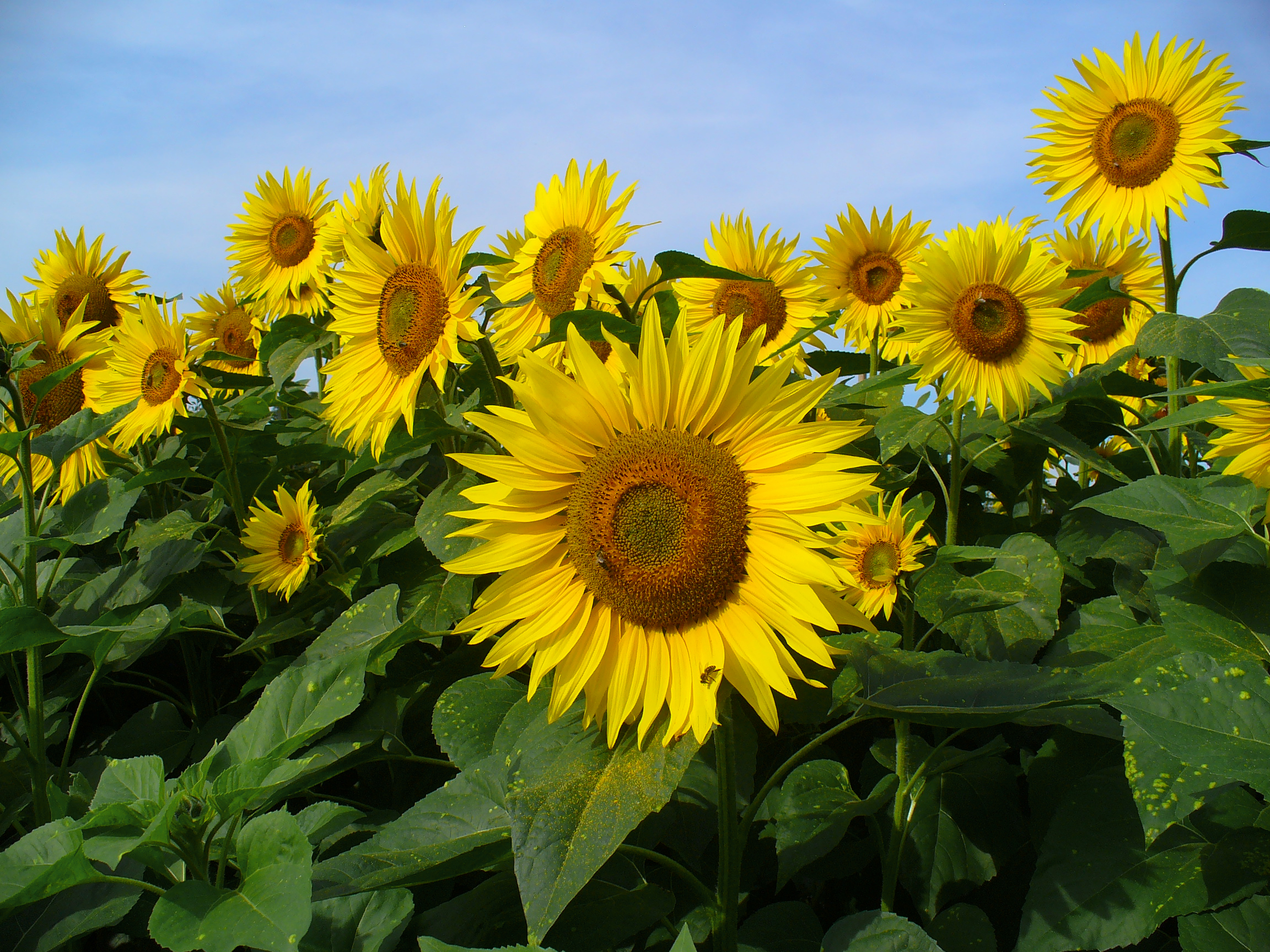
Helianthus annuus is native to North America and was domesticated by indigenous peoples in what is now the central United States[4]. The wild species evolved in tallgrass prairie conditions with seasonal drought, and modern cultivars retain this drought tolerance once established. The plant’s defining feature for water management is its taproot, which can extend 6–8 feet deep in good soil, allowing access to subsoil moisture that surface-watered plants never reach[5].
Use the finger or trowel test: stick a finger or trowel 3 inches into the soil at the drip line. If dry, water deeply. If still moist, wait. Established sunflowers in the ground tolerate brief drought well thanks to their taproots.
02 · THE BOTANY
Why sunflowers tolerate drought once established
Sunflower taproots grow downward extremely fast — up to 1 inch per day during establishment — reaching depths most garden plants never access[5][6]. A mature sunflower with a 6-foot taproot taps subsoil moisture reserves that are buffered against surface drying. This is why an established sunflower in deep soil can survive a week or two without rain, while a recently planted seedling without taproot development can die in 3–4 days of drought.
This drought tolerance is conditional: it requires the plant to develop its full taproot system, which in turn requires good soil structure and adequate watering during the critical early establishment phase. Sunflowers grown in containers, in compacted soil, or with shallow daily watering never develop the deep root system that provides drought tolerance[7]. They remain dependent on surface water for their entire lifecycle.
Sunflower water use efficiency — the amount of biomass produced per unit of water — is actually quite favorable compared to most garden plants[8]. Field-grown sunflowers in agricultural settings have historically been considered a drought-tolerant alternative to other oilseed crops. The garden ornamental cultivars retain this efficient water use when grown with appropriate techniques.
03 · SEASONAL SCHEDULE
Sunflower watering schedule by growth stage
Sunflowers are typically grown as annuals from spring sowing through fall harvest. Water needs vary substantially across the lifecycle[1][3].
01 · Seedling (first 3 weeks)
Every 2–3 days
Critical establishment period. Shallow roots need consistent surface moisture before taproot develops.
02 · Vegetative growth
Every 5–7 days
Plant developing taproot and growing rapidly upward. Deep infrequent watering encourages root development.
03 · Bud formation & flowering
Every 5–10 days
Peak water demand as plant supports large flowering head. Deep watering supports vibrant blooms.
04 · Seed development
Every 7–14 days
Reducing water slightly as seeds mature can improve seed quality without stressing the plant.
04 · FACTORS THAT MATTER
Six factors that change how often you water sunflowers
Container vs. in-ground: Container sunflowers (especially dwarf cultivars in small pots) need watering every 2–4 days in summer because their roots can’t reach deep soil moisture. In-ground sunflowers with established taproots may go 10–14 days between waterings.
Variety — dwarf vs. giant: Dwarf cultivars like ‘Music Box’ or ‘Big Smile’ have smaller root systems and need more frequent watering. Giant sunflowers like ‘Mammoth’ or ‘Russian Mammoth’ develop massive taproots and substantial drought tolerance once established.
Growth stage: Seedlings need consistent moisture every 2–3 days. Established vegetative plants need watering every 5–7 days. Flowering plants need consistent water for best bloom quality. Maturing seeds tolerate slightly drier conditions.
Weather: Hot dry windy weather doubles water demand. Cool cloudy weather halves it. Rainfall of 1 inch substitutes for a deep watering.
Soil type: Deep loam allows full taproot development and maximum drought tolerance. Sandy soils require more frequent watering. Heavy clay soils retain water longer but can restrict taproot growth.
Mulching: 2–3 inches of mulch around sunflowers reduces water demand by 30–50% by slowing evaporation. Mulched sunflowers need substantially less frequent watering than unmulched ones.
05 · UNDERWATERING SIGNS
Signs your sunflowers need water
Sunflowers give clear thirst signals before serious damage occurs.[9]
- Leaves wilt during the hottest part of the day. Some midday wilting is normal under intense sun even with adequate soil moisture. Persistent wilting that doesn’t recover overnight indicates legitimate drought stress.
- Lower leaves yellow and dry. Plants sacrifice oldest leaves first under drought. Yellow lower leaves while upper leaves remain healthy indicates mild chronic drought.
- Stems weaken and lean. Severe drought weakens stem structure. Tall sunflowers may lean or fall over if drought damages stem strength.
- Buds shrivel before opening. Severely underwatered sunflowers sacrifice flower buds to conserve water. Resuming watering returns the plant to normal bloom over subsequent weeks.
06 · OVERWATERING SIGNS
Signs you’ve overwatered your sunflowers
Sunflowers tolerate drought far better than over-saturation. Overwatering symptoms can be mistaken for disease.[10]
- Yellow leaves throughout the plant. Multiple yellow leaves — not just lower leaves — signal root damage from chronic over-saturation.
- Mushy or rotting stem base. Stems should be firm where they meet the soil. Softness or darkness at the base indicates crown rot.
- Slow growth despite warm weather. Sunflowers grow rapidly given adequate sun, warmth, and water. Stunted growth in summer suggests waterlogged roots.
- Persistent soil sogginess. Soil that stays wet for over a week between waterings indicates poor drainage. Improve drainage or reduce watering.
07 · THE METHOD
How to actually water sunflowers
Water deeply at the base of the plant, soaking the soil to a depth of 12–18 inches[1]. Shallow watering encourages shallow roots and reduces drought tolerance. Slow watering — from a drip line, soaker hose, or olla — allows deeper penetration than fast watering, which runs off the surface.
For container sunflowers, water until water drains freely from the pot’s drainage holes. Even saturation matters. Don’t leave the pot in standing water in a saucer.
Water in the morning when possible. Morning watering lets foliage dry during the day and reduces disease risk.
Olla irrigation works well for sunflower beds because it delivers water at depth without wetting foliage, encouraging deep root development. For complete olla setup, see best plants for olla irrigation. For arid climate growing, see ollas for hot weather and arid climates. For water conservation, see how clay ollas save 70% water.
08 · AWAY FROM HOME
Watering your sunflowers while you’re away
Established in-ground sunflowers tolerate brief absences (5–7 days) well if deeply watered before departure and properly mulched. Container sunflowers and seedlings need a sitter or slow-release watering for absences longer than 2–3 days.
For hot summer gardens, olla irrigation in sunflower beds provides consistent moisture for trips of any length. See ollas for hot weather and arid climates for arid climate setup and what is an olla for olla basics.
The most common sunflower vacation watering mistake: dependence on sprinklers that wet the foliage. Diseased sunflowers may be discovered on return. Base-level irrigation only.
Sunflower watering is fundamentally about establishment and depth: water consistently when young, then deeply but less frequently as plants mature. Established sunflowers in deep soil tolerate drought well thanks to their taproots; container and seedling sunflowers need more attention. Mulch heavily, water at the base, and use olla irrigation in dry climates for best results. For more on hot weather gardening, see ollas for hot weather and arid climates.
Frequently asked questions
How often should I water sunflowers?
Established sunflowers need deep watering every 7–14 days — about 1 inch of water per week. Seedlings need watering every 2–3 days. Container sunflowers need watering every 2–4 days in summer heat.
How do I know when sunflowers need water?
Stick a finger or trowel 3 inches into the soil at the drip line. If dry, water deeply. Persistent leaf wilting that doesn’t recover overnight also indicates drought stress.
How often to water sunflower seedlings?
Every 2–3 days for the first 3 weeks after germination. Seedlings have shallow roots and need consistent surface moisture until taproots develop.
How often to water sunflowers in pots?
Every 2–4 days in summer heat. Container sunflowers can’t reach deep soil moisture and need more frequent watering than in-ground plants.
How much water do sunflowers need?
Approximately 1 inch of water per week across the root zone for established plants. Younger plants and containers need slightly more frequent but smaller watering.
How often to water giant sunflowers?
Giant cultivars like Mammoth need deep weekly watering during vegetative growth and slightly more during flowering. Their substantial root systems allow them to access deep soil moisture between waterings.
Why are my sunflowers wilting?
Daytime wilting under intense sun is normal even with adequate soil moisture. Wilting that persists overnight indicates legitimate drought stress — check soil moisture and water deeply if dry.
Should I water sunflowers daily?
Generally no — daily light watering encourages shallow roots and reduces drought tolerance. Deep weekly watering is better. The exception is container sunflowers and seedlings, which may need more frequent attention.
References
- [1] North Dakota State University Extension. (2020). Sunflower production guide. ag.ndsu.edu.
- [2] Kansas State University Research and Extension. (2019). Sunflower production handbook. ksre.k-state.edu.
- [3] FAO. (2010). Sunflower crop water information. Land and Water Division. fao.org.
- [4] Heiser, C.B. (1976). The Sunflower. University of Oklahoma Press.
- [5] Connor, D.J., & Hall, A.J. (1997). Sunflower physiology. In Sunflower Technology and Production, 113–182. American Society of Agronomy.
- [6] Sadras, V.O., & Connor, D.J. (1991). Physiological basis of the response of harvest index to the fraction of water transpired after anthesis. Field Crops Research, 26(3–4), 227–239.
- [7] Connor, D.J., & Sadras, V.O. (1992). Physiology of yield expression in sunflower. Field Crops Research, 30(3–4), 333–389.
- [8] Stone, L.R., et al. (2002). Water requirements of sunflower. Agronomy Journal, 94(1), 81–88.
- [9] University of Minnesota Extension. (2021). Growing sunflowers. extension.umn.edu.
- [10] Penn State Extension. (2020). Sunflower diseases. extension.psu.edu.
- [11] USDA-NRCS. (2017). Sunflower water requirements and irrigation. nrcs.usda.gov.
- [12] Royal Horticultural Society. (n.d.). Helianthus annuus / RHS Gardening. rhs.org.uk.
- [13] Bainbridge, D.A. (2001). Buried clay pot irrigation. Agricultural Water Management, 48(2), 79–88.
- [14] Texas A&M AgriLife Extension. (2018). Sunflower production. agrilifeextension.tamu.edu.
- [15] Cornell Cooperative Extension. (2020). Sunflowers in the home garden. cce.cornell.edu.